
Restaurant Manager Job Description
Key Takeaways
- Restaurant managers run day-to-day operations, lead front-of-house and back-of-house teams, and protect both profitability and guest satisfaction across every shift.
- An effective manager job description should clearly outline responsibilities covering operations, people management, and profit accountability, along with required skills and realistic hours and pay for the 2025 hiring market.
- Many successful restaurant managers grow from server or bartender roles, with certifications like ServSafe Manager and alcohol service permits boosting employability and earning potential.
- Salaries in the U.S. typically range from about $50,000 to $70,000 per year in 2025, depending on concept, location, and experience, with performance bonuses often tied to sales and guest satisfaction scores.
- You can save significant time by using StaffedUp’s free AI-powered job description generator to turn this outline into a polished posting tailored to your restaurant.

What Does a Restaurant Manager Do?
A restaurant manager oversees daily restaurant operations across front-of-house, back-of-house, and bar areas to deliver a consistent, profitable guest experience. This role demands a multifaceted skill set that spans general management, customer service, human resources, and financial oversight. In smaller restaurants, managers handle direct customer and employee contact, while larger operations may involve more strategic, office-based work.
Core Operational Duties
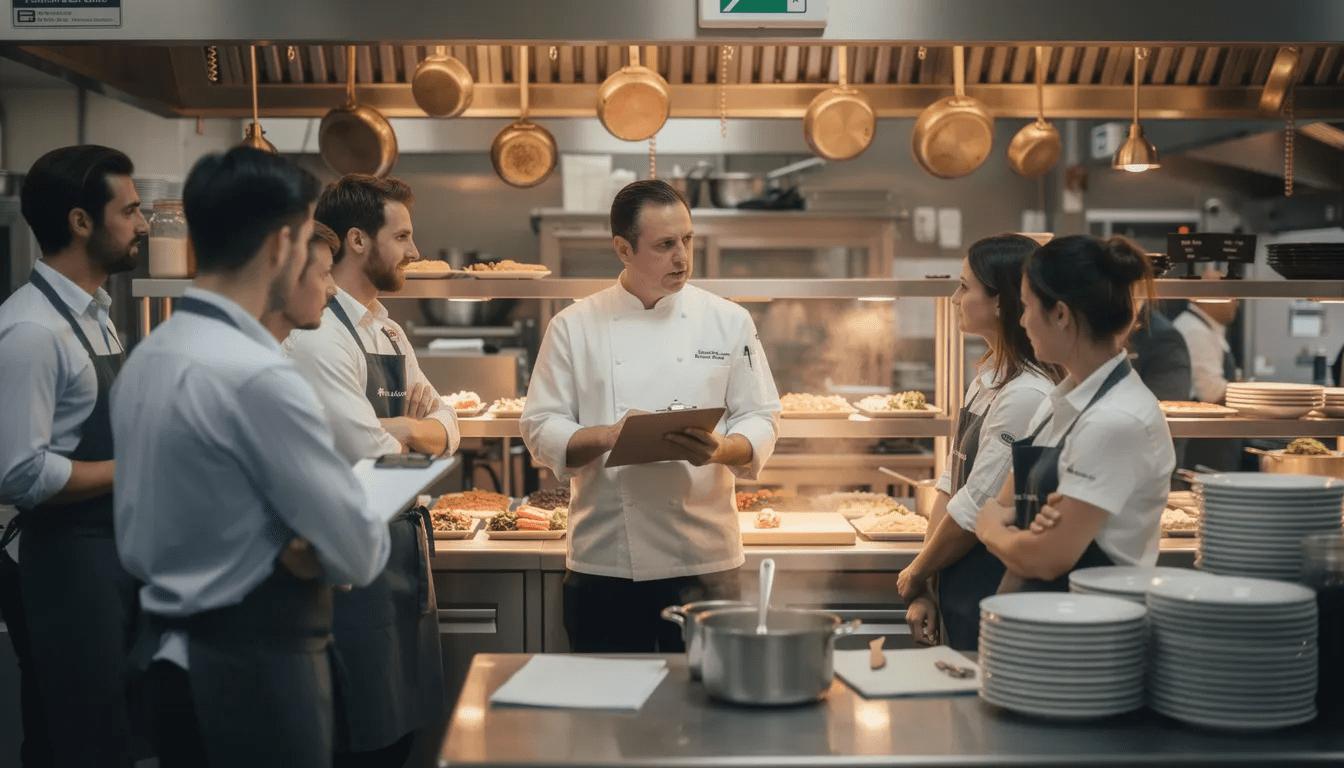
The restaurant manager’s duties start before the doors open and continue after the last guest leaves. Opening and closing procedures, shift oversight, and enforcing health and safety regulations form the foundation of daily operations. During peak periods like Friday and Saturday dinner rushes, managers monitor ticket times, resolve service bottlenecks, and step in to expedite orders when the kitchen falls behind. They coordinate with kitchen staff on prep lists and menu availability, ensuring the dining room runs smoothly even when unexpected challenges arise.
People Leadership
Managing employees effectively separates a good restaurant manager from an average one. This includes recruiting and scheduling restaurant staff, setting clear expectations, and coaching staff performance through regular feedback. Pre-shift meetings align the team on daily specials, reservation counts, and service standards. Creating a positive culture under pressure helps reduce turnover, which averages 75% annually across the restaurant industry.
Financial Accountability
Restaurant managers carry responsibility for hitting weekly sales and labor targets, managing cost of goods sold, and minimizing waste. Labor costs typically consume 30-35% of revenue, while food costs run 28-35%. Successful managers boost profitability by 10-15% through cost controls and waste-reduction measures. They prepare detailed weekly and monthly financial reports on revenues, expenses, and profitability for owners or regional managers.
If you’re building a job posting, you can plug these responsibilities into the StaffedUp job description generator to instantly produce a tailored “Day in the Life” section for your listing.
Key Restaurant Manager Responsibilities
The following responsibilities can serve as a scannable bullet list in your final job ad. Group them logically but keep them as one continuous list for easy reading by qualified candidates.
Operations
- Oversee opening and closing checklists to ensure smooth operations across all shifts
- Ensure proper setup of the dining room and bar before service begins
- Coordinate with kitchen staff on prep lists, menu availability, and food preparation timing
- Manage POS and reservation systems during service to track covers and table turns
- Monitor ticket times and expedite orders during high-volume periods
- Troubleshoot equipment breakdowns and coordinate repairs in a timely manner
People Management
- Hire and onboard new servers, bartenders, and hosts following company policies
- Run training shifts and conduct 30/60/90-day check-ins with staff members
- Create and manage shift schedules and staff schedules to meet labor targets
- Handle corrective action for poor performance and recognition for top performers
- Help build career paths for high performers and assistant restaurant managers
- Lead pre-shift meetings to align the team on goals and service standards
Guest Experience
- Greet VIPs and regulars by name to create a pleasant dining experience
- Handle escalated customer complaints and customer concerns in real time with empathy
- Monitor online reviews on Google and Yelp, responding professionally to feedback
- Approve comps and discounts within agreed limits to recover guest satisfaction
- Ensure the team delivers excellent customer service at every touchpoint
- Conduct tableside checks to confirm food quality and guest satisfaction
Financial and Inventory Control
- Track daily sales and labor costs in line with weekly targets
- Approve invoices and manage vendor relationships for ordering supplies
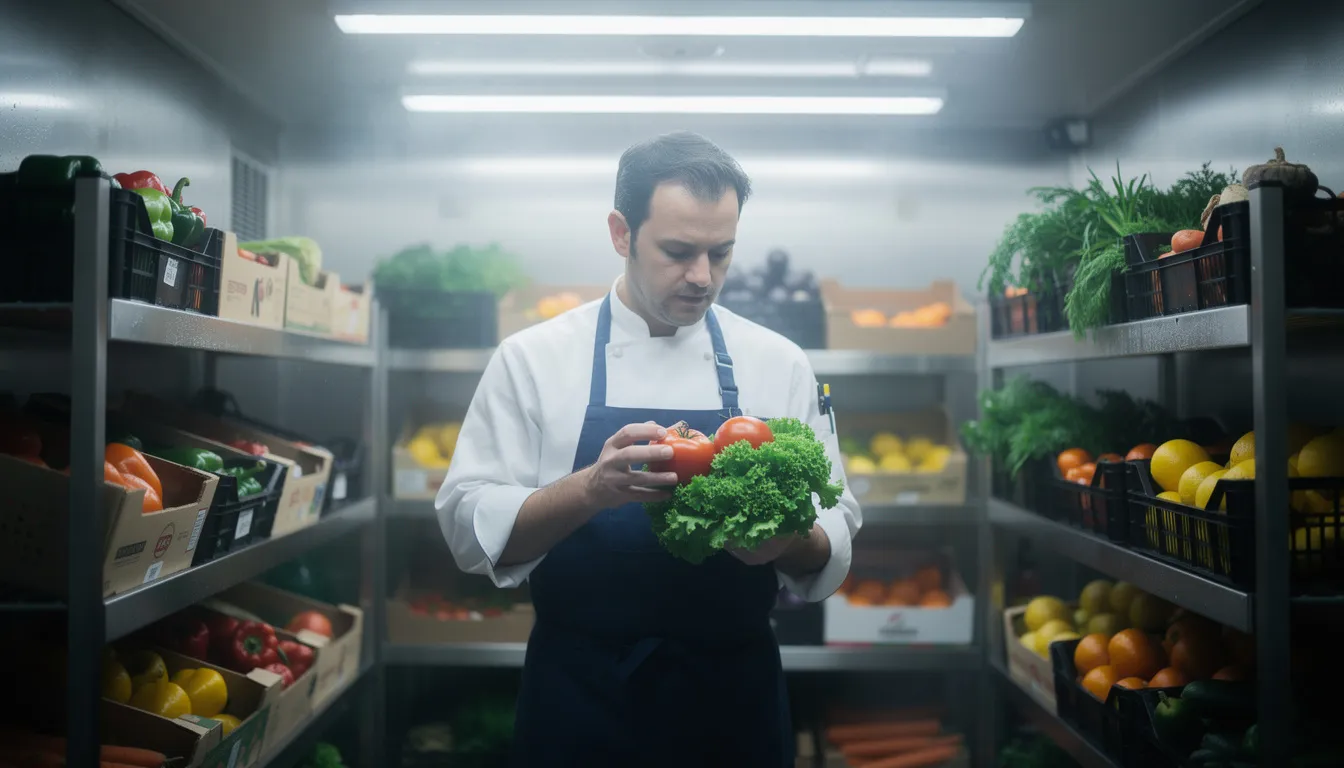
- Conduct weekly inventory counts and manage inventory to reduce waste
- Work with chefs and bar managers to minimize spoilage and control operational costs
- Prepare financial reports summarizing revenues, expenses, and financial performance
- Stay within budget limitations while maintaining food quality standards
Compliance and Safety
- Maintain up-to-date food safety logs, temperature records, and cleaning schedules
- Prepare the restaurant environment for local health inspections
- Enforce workplace safety policies and safety regulations across all areas
- Ensure responsible alcohol service and ensuring compliance with legal regulations
- Keep certifications current and train staff on food safety standards
- Document incidents and maintain records for enforcing sanitation standards
Marketing and Community Relations
- Support social media content creation and effective marketing strategies
- Promote seasonal menus and special events to drive traffic
- Coordinate with local community partners for sponsorships or charity nights
- Help fill midweek seats through promotions, events, and local outreach
- Build loyalty through word-of-mouth and engagement with the local community
You can copy this bullet list into StaffedUp’s AI tool to fine-tune the language for full-service, quick-service, or fast-casual concepts.
Restaurant Manager Skills and Qualifications
This section divides into soft skills and hard skills, though both are essential for success in this fast paced environment. Include the most relevant items in your posting to attract candidates with the right capabilities.
Soft Skills
- Strong leadership presence on the floor during peak service hours
- Clear communication skills with guests, staff, and vendors
- Calm decision-making and critical thinking under pressure
- Conflict resolution abilities for handling customer complaints and staff disputes
- Ability to coach and give constructive feedback that improves staff performance
- Positive attitude that sets the tone for the entire team
- Time management skills to balance administrative tasks with floor presence
Hard Skills
- Proficiency with restaurant management software and POS systems
- Experience with scheduling and payroll platforms
- Basic Excel or Google Sheets skills for tracking metrics and managing budgets
- Inventory control processes and ordering systems
- Familiarity with delivery apps and online ordering platforms
- Restaurant management software ability to run reports and analyze data
Knowledge Areas
- Food safety standards including FDA Food Code and local health department regulations
- Alcohol service laws and responsible beverage service requirements
- Cash-handling procedures and basic accounting concepts
- Understanding of labor percentage, cost of goods sold, and prime cost calculations
- Customer service standards that align with the hospitality industry
Desirable Traits
- Attention to detail in maintaining service standards
- Adaptability to changing menus, promotions, and staffing situations
- Comfort learning new technology tools and systems
- Willingness to work evenings, weekends, and holidays
When creating your job listing, include your top 6-8 must-have restaurant manager skills in the StaffedUp generator so the AI can prioritize them appropriately.

Experience Requirements for a Restaurant Manager
Setting realistic expectations helps you attract candidates who can succeed from day one while still encouraging strong up-and-coming supervisors to apply for the restaurant manager job.
Typical Experience Paths
Most independent restaurants and regional groups in 2025 prefer 2-5 years of progressive experience in hospitality management roles such as server, bartender, shift lead, or assistant manager. An experienced restaurant manager often has a proven track record of increasing responsibility and demonstrating leadership in previous positions.
Concept-Specific Experience
Specify the type of experience that matches your operation:
| Concept Type | Preferred Background |
| High-volume casual dining | Experience managing 150+ covers per shift |
| Fine dining | Wine knowledge, formal service training |
| Fast-casual | Speed of service metrics, labor optimization |
| Quick service | Drive-thru operations, high throughput |
| Multi-unit | Regional oversight, standardization |
Supervisory Experience
Prior responsibility for supervising teams is typically expected for full restaurant general manager roles. This might include:
- Leading shifts of 10-20 staff members
- Running a section or station independently
- Opening or closing the restaurant with full accountability
- Managing staff through busy service periods
Valuable Experience Areas
Candidates with experience in the following areas often transition smoothly into restaurant management:
- Handling escalated customer concerns professionally
- Preparing for and passing health inspections
- Managing third-party delivery operations
- Reviewing basic P&L statements and financial reports
- Implementing new menu rollouts or POS system changes
Consider adding a line like “Experience with opening a new location or rolling out a new menu is a plus” to attract candidates with project experience who can contribute to growth initiatives.
Education and Training Requirements
Formal education helps but isn’t always mandatory in the hospitality industry. Candidates with strong hands-on backgrounds should still be encouraged to apply for the restaurant manager role.
Minimum Education
Many employers accept a high school diploma or GED as a minimum requirement. However, there’s often a preference for candidates with:
- Associate’s degree in Hospitality Management
- Bachelor’s degree in Business Administration
- Culinary Arts degree or certificate
- Related coursework in food service management
Required Certifications
| Certification | Purpose |
| ServSafe Food Protection Manager | Demonstrates food safety knowledge |
| TIPS, BASSET, or state-specific alcohol certification | Responsible beverage service |
| First Aid/CPR | Emergency response capability |
| Local food handler cards | City or county-specific compliance |
Alternative Pathways
Internal training programs or restaurant group “Manager-in-Training” pathways serve as acceptable alternatives to formal degrees. Many restaurant chains promote from within, developing servers and shift leads into capable managers through structured training.
Regional Requirements
Highlight any required local permits or city-specific food handler cards in your posting to reduce confusion for applicants relocating from other states. Requirements vary significantly between jurisdictions.
StaffedUp’s AI generator can automatically insert region-specific compliance language once you select your state or country during the job creation process.
Restaurant Manager Salary Expectations
Pay ranges vary widely based on concept, hours, and location. Transparent restaurant manager salary expectations help attract serious candidates who understand the compensation structure.
2025 Salary Benchmarks
In the United States in 2025, many restaurant managers earn roughly $50,000 to $70,000 per year in base salary. Smaller markets tend toward the lower end, while high-cost cities and upscale concepts reach the higher end or beyond.
| Factor | Impact on Salary |
| Urban vs. rural location | $10,000-$20,000 difference |
| Fine dining vs. casual | 15-25% premium for upscale |
| Multi-unit responsibility | 20-30% premium |
| Years of experience | 3-5% increase per year |
Performance Bonuses
Many restaurant management positions include bonuses tied to:
- Monthly or quarterly sales targets
- Profitability metrics and cost control
- Secret shopper and guest satisfaction scores
- Staff retention and training completion rates
- Food cost and labor cost percentages
Tips participation may also apply depending on local laws and restaurant policies.
Benefits Package
A competitive market demands more than base salary. Consider offering:
- Health, dental, and vision insurance
- Paid time off and sick leave
- Retirement plans with employer matching
- Free or discounted meals during shifts
- Parking or transit stipends
- Professional development opportunities
- Tuition reimbursement for hospitality courses
Schedule Expectations
Be transparent about hours in your job description. Most restaurant managers work:
- Evenings, weekends, and holidays regularly
- Average 45-55 hours per week
- Variable schedules based on business needs
- Some restaurants offer rotating weekends off
Use StaffedUp’s tools or external salary calculators to sanity-check your range before publishing your job posting.

How to Write a Restaurant Manager Job Description
This section serves as a practical mini-guide you can follow step by step to turn this outline into a complete posting for your job boards.
Step 1: Write a Compelling Job Summary
Start with 3-4 sentences that name your concept and set expectations:
“We’re seeking an energetic Restaurant Manager to lead daily operations at our scratch-kitchen neighborhood bistro. You’ll oversee a team of 25 during dinner service, manage labor and food costs, and ensure every guest leaves planning their next visit. Success in your first 90 days means mastering our systems, building trust with the team, and hitting weekly sales targets.”
Step 2: Build Your Responsibilities Section
Select 10-15 of the most relevant bullets from the responsibilities section earlier, tailored to your restaurant’s size and style. A bar-heavy concept should emphasize beverage program management, while family dining might focus on kid-friendly service and party coordination.
Step 3: Create Clear Requirements
Separate requirements into two categories:
Must-Have (Non-Negotiables)
- Minimum years of experience
- Required certifications
- Schedule flexibility for evenings and weekends
- Physical ability to stand for extended periods
Nice-to-Have
- Degree in hospitality management
- Multi-unit experience
- Advanced technology skills
- Bilingual abilities
Step 4: Describe Your Culture
Include a short paragraph on company policies and values:
- Team-first mentality and collaboration
- Your hospitality philosophy and approach to excellent customer service
- Promotion-from-within practices
- Approach to work-life balance in the restaurant environment
Step 5: Add a Clear Call-to-Action
Tell candidates exactly how to apply:
“Ready to lead our team? Apply now by uploading your resume through StaffedUp. Please include your availability and 1-2 professional references.”
Using the StaffedUp AI job description generator lets you paste in this outline and instantly receive a polished, on-brand job post optimized for your competitive market.
Related Roles and Career Path
Understanding how the restaurant manager position fits into a broader hospitality career ladder helps you attract ambitious candidates who want long-term growth opportunities.
Feeder Roles
Most restaurant managers advance from entry-level positions through demonstrated leadership:
- Server or bartender (2-3 years)
- Head server or lead bartender (1-2 years)
- Shift supervisor or floor manager (1-2 years)
- Assistant restaurant manager (1-2 years)
- Kitchen manager transitioning to front-of-house leadership
Related Positions
When hiring, consider whether you might also need:
| Role | Primary Focus |
| Assistant Restaurant Manager | Supports GM, manages specific shifts |
| Floor Manager | Oversees dining room service |
| Bar Manager | Beverage program, bar staff, inventory |
| Kitchen Manager | Back-of-house operations, food costs |
| General Manager | Full P&L accountability, strategy |
| Multi-Unit Manager | Oversees 3-8 locations |
Reporting Structure
A restaurant manager typically reports to an Owner, General Manager, or Regional Manager. The management team they supervise often includes:
- Shift supervisors and team leads
- Head servers and lead bartenders
- The front-of-house team
- Sometimes shared oversight of kitchen staff
Career Progression
Highlight growth opportunities in your job description to attract candidates who want a long-term path:
Restaurant Manager → General Manager → Area/Regional Manager → Director of Operations → Vice President of Operations
Many multi-location groups promote from within, making the restaurant manager role an excellent stepping stone for career-focused hospitality professionals.
Frequently Asked Questions About Restaurant Managers
This FAQ addresses common questions from both candidates and employers that aren’t fully covered in the sections above.
Is a restaurant manager the same as a general manager?
Not always. A restaurant manager typically runs one location’s day-to-day operations, focusing on shift management, staff supervision, and customer satisfaction. A restaurant general manager often has broader strategic responsibilities, including full P&L accountability, hiring authority for all positions, and sometimes oversight of multiple stores. The distinction depends on the organization’s structure.
Do restaurant managers work set hours or variable shifts?
Most managers work variable schedules that include nights, weekends, and holidays. Expect 45-55 hours per week on average. Some restaurants offer partial flexibility, such as rotating weekends off or consistent days off during slower periods. The fast paced environment of restaurant operations typically requires managers to be present during peak service hours.
Can I become a restaurant manager without a degree?
Yes. Many managers are promoted from within after several years of strong performance in server, bartender, or supervisor roles. Certifications like ServSafe Manager and alcohol service permits can speed up advancement. Short hospitality courses and internal training programs also help candidates develop the management skills needed for the role.
What’s the difference between a restaurant manager and a restaurant supervisor?
Supervisors usually oversee a single shift or section and report to the manager. They handle real-time service issues and basic training staff duties. The restaurant manager is accountable for hiring, managing budgets, overall financial performance, and ensuring compliance with all legal regulations. Supervisors are part of the management team but don’t carry full operational responsibility.
How can I quickly create a professional restaurant manager job description?
Start with the responsibilities, skills, and requirements outlined in this article. Then use StaffedUp’s AI job description generator to automatically format everything into a polished posting. The tool lets you customize for your concept, add your salary range and benefits, and optimize the language for job boards—saving you hours of writing and editing time.

Hire Smarter, Faster
StaffedUp simplifies hiring for restaurant & hospitality operators. Post your first job for $1.