
How to Write a Job Description That Attracts Top Hospitality Talent
Writing a job description might seem like a simple step in the hiring process — but in the hospitality industry, it’s one of the most powerful tools for attracting quality candidates. A clear, engaging, and accurate job description doesn’t just list duties; it sells your workplace culture, sets expectations, and connects with the right type of employee.
Whether you’re hiring a bartender, line cook, server, or general manager, knowing how to write a job description that speaks to your audience is essential. In this guide, we’ll break down every element of a high-performing restaurant or hospitality job description — and show you how to streamline the process with hiring tools like StaffedUp.

Why Job Descriptions Matter More Than Ever
In an increasingly competitive labor market, job seekers have choices. Your job description is often their first impression of your business — and it can make or break whether they apply.
A great job description does three key things:
- Communicates expectations clearly — avoiding confusion and turnover later.
- Reflects your brand and culture — helping candidates self-select based on fit.
- Encourages action — with a clear, mobile-friendly call to apply.
Unfortunately, many restaurants still use vague or outdated templates. “Now hiring servers” or “Help wanted” posts don’t inspire anyone to apply. If you want to stand out, you need a strategic approach.

Step 1: Define the Role Before You Write
Before you even start typing, clarify exactly what you’re hiring for. The most successful job descriptions are built on a deep understanding of the role’s purpose, daily tasks, and success criteria.
Ask yourself:
- What are the top 3–5 responsibilities of this position?
- What skills or traits are essential?
- Who does this employee report to, and what team are they part of?
- What does success look like in this role after 90 days?
Getting clarity here ensures your job post attracts qualified candidates — not just applicants looking for “any job.”
💡 Pro Tip: Multi-unit restaurant managers using StaffedUp often create internal role templates within the platform. This saves time and ensures consistency when multiple locations hire for similar positions.
Step 2: Write a Clear and Searchable Job Title
Your job title is one of the most important elements for SEO and visibility. Keep it clear, concise, and industry-standard. Avoid overly creative or internal titles like “Hospitality Rockstar” or “Guest Experience Ninja” — they might sound fun but won’t show up in job searches.
Instead, use recognizable titles such as:
- Server / Waitstaff
- Line Cook / Prep Cook
- Restaurant General Manager
- Host / Hostess
- Bartender
If your restaurant offers something unique, add it as a descriptor — e.g., “Fine Dining Server” or “Fast Casual Line Cook.” This helps your job post appear in more relevant searches while appealing to candidates with the right background.
Step 3: Start with an Engaging Summary
Your opening paragraph should hook the reader immediately. Think of it like an elevator pitch — short, friendly, and focused on why someone would want to work for you.
Here’s an example:
“Looking to join a fast-paced, team-oriented restaurant where you can grow your skills and make an impact every day? [Restaurant Name] is hiring an enthusiastic [Position Title] to help deliver exceptional service and unforgettable guest experiences.”
In 2–3 sentences, communicate your culture, your mission, and what makes your restaurant stand out from others hiring in the area.
Step 4: Outline Key Responsibilities
This section helps applicants visualize their daily role and ensures you attract those with the right skills. Keep it specific but readable — aim for 5–8 bullet points written in action-oriented language.
Example for a Server role:
- Greet guests promptly and provide excellent table service.
- Accurately take orders and enter them into the POS system.
- Ensure guest satisfaction throughout their dining experience.
- Collaborate with kitchen and bar staff for smooth service flow.
- Handle payments accurately and maintain cash drawer balance.
Avoid fluff like “performs other duties as assigned.” Instead, focus on what truly defines success in the role.

Step 5: Highlight Required and Preferred Qualifications
This section helps filter applicants while keeping your pool inclusive. Focus on the must-haves first, then add nice-to-haves separately.
Example structure:
Required:
- Previous experience in a fast-paced hospitality environment
- Strong communication and teamwork skills
- Availability for nights and weekends
Preferred:
- Knowledge of POS systems (Toast, Square, etc.)
- Food Handler or Alcohol Server Certification
- Passion for hospitality and customer service
💡 Tip: Many employers lose candidates by setting overly strict requirements. If a skill can be trained, don’t list it as mandatory. Instead, emphasize qualities like enthusiasm, reliability, and eagerness to learn.
Step 6: Sell Your Company Culture
Your job description isn’t just about what you need — it’s about what you offer. The hospitality industry thrives on personality, teamwork, and energy. Show applicants why your restaurant is a great place to work.
Include a short paragraph about your values and culture. For example:
“At [Restaurant Name], we believe in creating memorable experiences for both our guests and our team. Our staff are treated like family — we support growth, encourage creativity, and celebrate success together.”
This section helps potential candidates see themselves thriving in your environment, reducing turnover and increasing long-term engagement.
Step 7: Be Transparent About Pay and Benefits
Salary transparency isn’t just a best practice — it’s a competitive advantage. According to Glassdoor, job listings that include pay ranges get 30% more applicants than those that don’t.
List pay clearly (e.g., “$17–$22/hour plus tips, based on experience”) and highlight benefits, such as:
- Free or discounted meals
- Flexible scheduling
- Career advancement opportunities
- Health or dental coverage (if applicable)
- Employee referral programs
This demonstrates that your restaurant values fairness and transparency — key drivers of employee trust.
Step 8: Include a Clear Call to Action (CTA)
Every great job description ends with a call to action that encourages candidates to apply right away. Keep it simple and direct, such as:
“Ready to join our team? Apply today — it only takes a few minutes through our mobile-friendly application.”
💡 Smart Integration: If your restaurant uses StaffedUp, you can embed this CTA directly into your job post, linking candidates to an instant-apply page optimized for mobile. This removes barriers that cause drop-offs and boosts conversion rates.
Step 9: Make It Mobile-Friendly
According to Indeed, nearly 70% of hospitality job seekers apply from their phone. That means your job description needs to be short, scannable, and formatted for smaller screens.
Keep paragraphs short (2–3 sentences max) and use:
- Bullet points
- White space
- Simple formatting (no long walls of text)
StaffedUp’s design automatically optimizes job listings for mobile applications, ensuring candidates can apply quickly without technical frustrations.
Step 10: Keep It Updated
Your restaurant evolves — your job descriptions should too. Update them regularly to reflect:
- New menu concepts or service styles
- Changes in responsibilities or reporting structure
- Shifts in company values or benefits
Regularly auditing your job listings ensures consistency and accuracy across multiple locations. With StaffedUp’s dashboard, you can edit, duplicate, and relaunch roles in seconds.
Bonus: Common Mistakes to Avoid
Even experienced managers make mistakes when writing job descriptions. Here are some pitfalls to steer clear of:
| Mistake | Why It Hurts | How to Fix It |
| Being too vague | Leads to unqualified applicants and confusion | Be specific about duties and expectations |
| Listing unrealistic requirements | Discourages good candidates from applying | Focus on “must-have” vs. “nice-to-have” skills |
| Neglecting culture | Makes your listing feel cold and transactional | Add personality — make it sound like your restaurant |
| Skipping pay transparency | Reduces trust and applicant volume | Always include pay ranges or tip structure |
| Ignoring mobile users | Causes high abandonment rates | Optimize for mobile applications via StaffedUp |
Putting It All Together: The Anatomy of a Great Job Description
Here’s what a well-written job description might look like when it’s done right:
Example: Line Cook – The Riverbend Grill
Overview:
Are you passionate about food and thrive in a fast-paced kitchen environment? The Riverbend Grill is hiring an experienced Line Cook to join our team and help us deliver exceptional meals in a lively, team-focused setting.
Responsibilities:
- Prepare menu items following recipes, portion standards, and presentation guidelines
- Maintain cleanliness and organization of kitchen stations
- Work closely with the kitchen team to ensure timely service
- Follow all food safety and sanitation protocols
Qualifications:
- 1+ year of experience in a professional kitchen
- Ability to work evenings and weekends
- Positive attitude and strong attention to detail
Perks & Benefits:
- Competitive hourly pay ($18–$22/hr DOE)
- Free staff meals
- Career growth opportunities within a growing restaurant group
Apply Now:
Join a team that values quality, collaboration, and creativity. Apply today through StaffedUp — it only takes 3 minutes!

How StaffedUp Simplifies the Job Description Process
Writing great job descriptions takes time, and posting them across multiple platforms can be tedious. That’s where StaffedUp comes in.
With StaffedUp, restaurants can:
- Build and reuse customizable job templates
- Post instantly across multiple hiring channels
- Receive mobile applications directly in one dashboard
- Communicate with candidates via text or email
- Track hiring metrics to improve job post performance
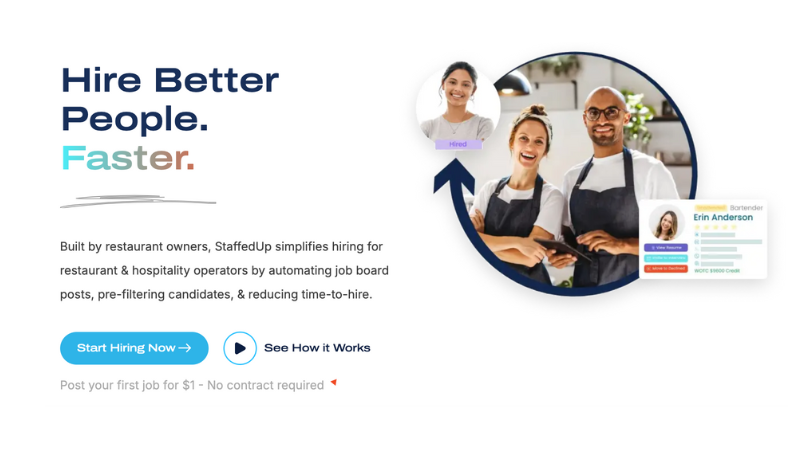
By simplifying the process and keeping everything in one place, StaffedUp ensures you’re not just hiring faster — you’re hiring smarter.
Conclusion: Great Job Descriptions Lead to Great Teams
Knowing how to write a job description that connects with top hospitality talent is one of the simplest yet most impactful ways to improve your hiring outcomes.
The right post doesn’t just attract more candidates — it attracts the right ones. It sets clear expectations, reflects your brand, and inspires action.
When paired with a modern hiring platform like StaffedUp, you can scale this approach effortlessly — ensuring that every role, from dishwashers to managers, starts with a clear, consistent, and compelling message.

Hire Smarter, Faster
StaffedUp simplifies hiring for restaurant & hospitality operators. Post your first job for $1.