
What Should Labor Cost Be in a Restaurant? A Complete Guide for Operators
Labor is one of the largest — and most unpredictable — expenses in the restaurant industry. Between wages, benefits, and taxes, it’s not unusual for labor to consume up to a third of total revenue. But how do you know if your restaurant’s labor costs are too high, too low, or just right?
Whether you run a single neighborhood café or manage multiple locations, understanding labor cost benchmarks and how to control them can dramatically improve profitability.
In this article, we’ll break down everything you need to know about restaurant labor costs, including how to calculate them, what’s considered a healthy percentage, and how technology (including hiring tools like StaffedUp) can help you keep costs in check without burning out your team.

Understanding Labor Cost in Restaurants
Labor cost refers to the total amount a restaurant spends on employees, including:
- Hourly wages and salaries
- Payroll taxes (Social Security, Medicare, etc.)
- Employee benefits (health insurance, paid time off, etc.)
- Overtime pay
- Bonuses and incentives
Labor costs are one of the biggest operational expenses — alongside food costs and rent — and directly affect profit margins.
For example: If your restaurant generates $100,000 in monthly sales and your total labor cost is $32,000, your labor cost percentage is 32%.
What Should Labor Cost Be in a Restaurant?
The ideal labor cost depends on your restaurant type, service model, and size — but in most cases, it falls between 25% and 35% of gross revenue.
Here’s a general breakdown by restaurant category:
| Restaurant Type | Ideal Labor Cost % | Notes |
| Quick Service (QSR) | 25%–30% | Fast-paced operations, smaller staff per shift |
| Fast Casual | 28%–32% | Slightly higher service expectations |
| Full-Service | 30%–35% | More labor-intensive with table service |
| Fine Dining | 35%–40% | Premium service and prep times increase costs |
Full-service restaurants naturally have higher labor costs because service expectations are higher and kitchen prep requires more time and skill.
However, a high labor percentage isn’t always bad — it’s about efficiency, not just expense. If you’re paying more to retain skilled staff who deliver great guest experiences and drive repeat business, that investment often pays off.
How to Calculate Your Labor Cost Percentage
Calculating labor cost is simple, but tracking it consistently is where most restaurants fall short.
Here’s the basic formula:
Labor Cost % = (Total Labor Cost ÷ Total Sales) × 100
Example:
If your total labor cost for the month is $40,000 and your total sales are $120,000: ($40,000 ÷ $120,000) × 100 = 33.3%
That means labor makes up roughly a third of your revenue — a typical figure for many full-service restaurants.
For a deeper look, consider calculating:
- Prime cost (labor + cost of goods sold)
- Labor cost per labor hour (to measure productivity)
- Labor cost by department (FOH vs. BOH vs. management)
Tracking these numbers helps managers make data-driven staffing decisions rather than relying on guesswork.
The Hidden Costs Behind Labor
Wages are just one part of the equation. True labor cost includes all the “invisible” expenses that come with employing people.
Hidden costs include:
- Payroll processing fees
- Overtime premiums
- Recruiting and onboarding costs
- Training time
- Turnover and lost productivity
In fact, according to the U.S. Department of Labor, replacing a single hourly restaurant worker can cost $3,000–$5,000 when you account for recruitment, training, and lost revenue.
This is where hiring software like StaffedUp helps reduce long-term labor costs by streamlining the recruitment process, improving applicant quality, and reducing turnover — all without increasing your workload.

Balancing Labor Cost and Service Quality
One of the toughest management challenges is finding the balance between controlling labor costs and maintaining great service.
Cutting too much staff to hit a target percentage can backfire. Overworked employees make more mistakes, morale drops, and customer experience suffers — leading to lower sales and higher turnover.
Instead, focus on efficiency, not cuts.
Practical strategies include:
- Scheduling based on forecasted sales, not just last week’s schedule.
- Cross-training employees to cover multiple roles.
- Using technology to automate low-value tasks like tip pooling, shift swaps, or applicant tracking.
- Reviewing sales-per-labor-hour data to identify slow shifts where staffing can be optimized.
The goal isn’t to have fewer people — it’s to have the right people in the right place at the right time.
Tools to Help Manage Labor Costs
The days of managing labor through spreadsheets are over. The best-performing restaurants now rely on integrated tech stacks that bring together scheduling, payroll, and hiring into one streamlined workflow.
Here are some tools that can help:
- Scheduling Software: Platforms like 7shifts and HotSchedules make it easier to forecast and adjust staffing levels.
- Payroll Systems: Software like Gusto or Toast Payroll automates wage calculations and compliance.
- Hiring Platforms: StaffedUp helps managers attract and hire quality candidates quickly, preventing costly turnover.
When your hiring and scheduling systems work together, you can fill shifts faster, reduce overtime, and keep your labor costs within budget — without sacrificing service.
Seasonal and Market Factors Affecting Labor Cost
Labor costs aren’t static — they fluctuate based on external factors like:
- Seasonal demand (holidays, sports seasons, tourist spikes)
- Minimum wage changes
- Competition for talent in your area
- Economic conditions affecting sales volume
To stay profitable, restaurant managers need to forecast labor with flexibility in mind. During busy seasons, labor costs might temporarily rise — but higher volume offsets it. In slower months, managers can adjust schedules, implement part-time roles, or refocus staff on training and cross-functional work.
StaffedUp’s location-based job posting tools help you stay proactive in these shifts — keeping your candidate pipeline full before seasonal rushes hit.

Why Turnover Impacts Labor Cost
Even if your wage percentages are stable, high turnover quietly inflates your labor costs.
When employees leave, you don’t just lose their labor — you lose productivity, consistency, and customer trust. The process of rehiring and retraining adds hidden costs to your labor budget.
Restaurants that maintain strong hiring and retention systems can save thousands annually. Here’s how:
- Hire more efficiently: With a tool like StaffedUp, managers can post to multiple job boards at once and track applicants in one dashboard.
- Onboard consistently: Streamlined onboarding reduces wasted time and errors.
- Retain top talent: A positive, organized hiring experience attracts better candidates and keeps them longer.
Reducing turnover even by 10% can translate into a significant drop in labor-related costs over a year.
Using Data to Make Smarter Labor Decisions
Data-driven scheduling and staffing decisions are becoming standard in 2025. The best managers don’t rely on instinct — they rely on metrics.
Here’s what to track:
| Metric | Why It Matters |
| Labor Cost % | Core profitability measure |
| Overtime Hours | Indicator of scheduling inefficiency |
| Sales per Labor Hour | Measures staff productivity |
| Turnover Rate | Reveals hiring and retention issues |
| Time-to-Hire | Affects labor stability and cost |
By integrating hiring data from StaffedUp with scheduling and payroll systems, operators can spot inefficiencies earlier and adjust staffing models before problems grow costly.
Case Study: How a Restaurant Group Lowered Labor Cost by 12%
A Midwest-based restaurant group operating five casual dining locations struggled with high turnover and rising labor costs. Each location handled hiring differently, and corporate managers lacked visibility into open roles.
After implementing StaffedUp, they centralized hiring across all stores. Within three months:
- Time-to-hire dropped by 45%
- Average labor cost decreased from 34% to 30%
- Turnover improved by 18% due to better-fit candidates
- Managers reported spending 50% less time on recruiting
With better hiring data and faster onboarding, the group was able to forecast labor needs accurately and reduce overstaffing without cutting service quality.
How to Keep Labor Costs Sustainable Year-Round
Consistency is key to profitability. Here’s how to keep labor costs balanced no matter the season:
- Regularly review labor-to-sales ratios by week and month.
- Benchmark against past years, adjusting for inflation and wage increases.
- Cross-train your top employees to handle peak times without hiring additional part-timers.
- Automate hiring and scheduling workflows to save time and prevent last-minute coverage issues.
Sustainable labor cost management isn’t about squeezing every dollar — it’s about creating systems that make staffing predictable and scalable.
When to Reevaluate Your Labor Targets
If your labor cost suddenly spikes above your target range, it’s time to dig deeper. Ask questions like:
- Did sales drop, or did wages increase?
- Are there too many people scheduled for low-volume shifts?
- Is turnover causing inefficiency in training?
- Have overtime hours crept up?
These insights help managers identify whether the issue is structural or situational — and take the right corrective action.
Final Thoughts
Labor cost is one of the most controllable (and impactful) parts of running a restaurant. By understanding your true labor cost, monitoring the right metrics, and using technology to support efficient hiring and scheduling, you can maintain profitability without sacrificing guest experience.
As the hospitality industry becomes more competitive, smart managers rely on data, technology, and teamwork — not guesswork. StaffedUp helps restaurant operators simplify hiring, reduce turnover, and make smarter labor decisions through organized, centralized recruiting. Explore how it can help you maintain labor balance and team consistency at StaffedUp.

Hire Smarter, Faster
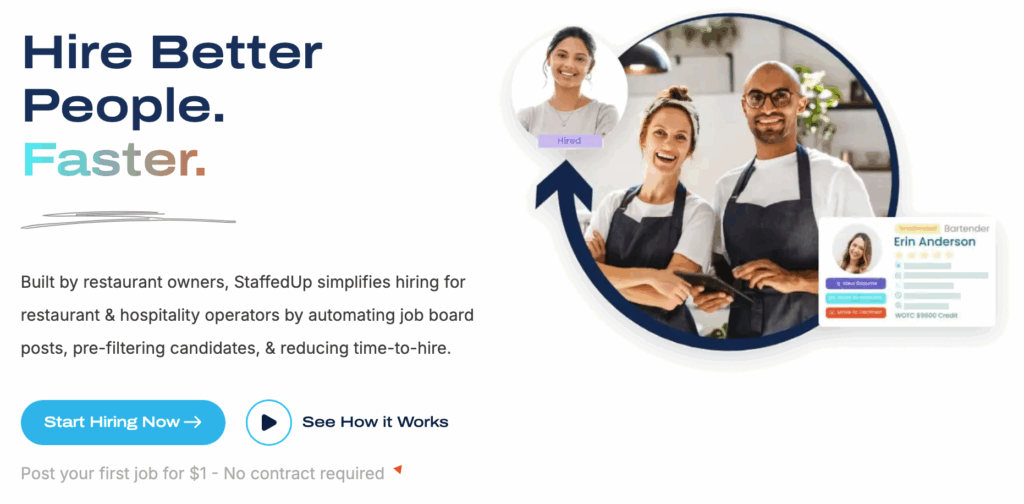
StaffedUp simplifies hiring for restaurant & hospitality operators. Post your first job for $1.