

External image

ATS Hospitality Industry: A Simple Guide for Hotels, Restaurants, and Bars

Hiring in the hospitality space moves fast. Managers deal with high turnover, last-minute callouts, seasonal swings, and long lines of job seekers. This is why more teams are turning to an ATS made for the hospitality industry. An ATS (applicant tracking system) helps managers post jobs, sort applicants, and hire the right people without wasted time.

In this guide, we will break down what an ATS is, why it matters so much in the hospitality space, and how it helps hotels, bars, and restaurants keep their teams staffed. The goal is simple: give you clear, easy-to-use information without tech jargon.

If your team needs a fast way to keep roles filled, StaffedUp gives hospitality managers simple tools to hire without stress.

Image

What Is an ATS in the Hospitality Industry?

A hiring process in restaurants, hotels, and bars moves at a fast pace. Roles open often, applicants apply at all hours, and managers need to sort and respond quickly. An ATS, short for applicant tracking system, is a digital tool that helps with all of this. It keeps every step of hiring in one place so managers do not lose time or miss good candidates.

Basic Meaning of an ATS

An ATS is software used to collect, sort, and track applicants. Instead of reading dozens of emails or paper forms, managers can log in and see all job seekers in one clean list. Each person has a simple profile showing their work history, answers, and notes from the team.

How an ATS Helps Hiring Teams in Hospitality

When the dinner rush is coming or a hotel hits full occupancy, there is no time to dig through messy inboxes. An ATS helps by:

These small tools save hours each week.

Why Hotels, Bars, and Restaurants Use an ATS More Than Ever

Hiring needs have grown fast in hospitality. More staff leave, more roles open, and customers expect smooth service. This means managers need a way to respond quickly to job seekers. An ATS helps teams hire faster, stay organized, and fill roles before shifts fall short.

If you want a hiring tool built for hospitality jobs, StaffedUp offers simple sorting, fast posting, and tools made for busy teams.

Why the Hospitality Industry Needs an ATS More Than Other Sectors

Hiring in hospitality is different from other fields. Restaurants, hotels, and bars deal with constant staff changes, fast pace, and roles that must be filled right away. An ATS made for the hospitality industry helps teams keep up with this speed and avoid staffing gaps that hurt service.

High Turnover and Staffing Gaps

Turnover in hospitality is one of the highest of any job sector. People move often, switch roles, work seasonal jobs, or need flexible hours. This creates frequent hiring needs. An ATS keeps you ready with saved job posts, stored applicants, and a clean applicant list so you can replace roles quickly.

Fast Hiring Needs During Busy Seasons

Hotels and restaurants face waves of demand, such as holidays, travel seasons, and local events. When crowds grow, hiring must keep up. An ATS helps you:

  • Post jobs faster
  • Sort new applicants sooner
  • Contact strong candidates before other places do

This is how teams stay staffed when business picks up.

Large Flow of Applicants for Entry-Level Roles

Front desk agents, servers, hosts, housekeepers, line cooks, and bartenders often bring in high numbers of applicants. That is good, but it also means more manual work if you are using email or spreadsheets. An ATS sorts these applicants for you and keeps everything neat.

Need for Fair, Clear, and Quick Sorting of Job Seekers

Applicants want fast replies. They also expect a simple experience when applying. An ATS lets you move through applicants fast without missing anyone. Sorting tools help managers pick the best people while keeping the process fair and consistent.

When hiring ramps up, StaffedUp helps teams keep everything clean and simple, so no good applicant is missed.

Key ATS Features That Help Hospitality Teams

An ATS built for the hospitality industry focuses on speed, clarity, and teamwork. Restaurants, hotels, and bars need tools that fit real daily work—not complex tech. Below are the features that matter most for busy managers who want to hire without stress.

Easy Job Posting to Many Job Boards at Once

Instead of posting one job at a time on several sites, an ATS lets you create one job post and share it everywhere with one click. This saves time and gives your job more reach.

Simple Sorting and Ranking of Applicants

Applicants come in fast, and managers do not have hours to scan every resume. Sorting tools help by:

  • Tagging by skill
  • Grouping by experience level
  • Highlighting strong matches
  • Marking applicants as “interview,” “maybe,” or “not a fit”

This keeps things clean and easy to follow.

Quick Screening Tools

Basic questions can screen applicants fast. For example:

  • “Do you have weekend availability?”
  • “Are you comfortable working in a fast-paced kitchen?”
  • “Do you have front desk experience?”

Answers help managers decide who moves on without extra back-and-forth messages.

Auto Messages for Scheduling

Managers can send interview invites or updates with just a few clicks. Simple auto messages reduce delays and keep applicants engaged.

Team Notes and Shared Feedback

Hotels and multi-location restaurants often have several managers reviewing candidates. Team notes keep everyone aligned and help avoid double work or missed steps.

Mobile Access for Managers on the Go

Most hospitality managers rarely sit at a desk. Mobile access helps them:

  • View new applicants
  • Reply fast
  • Tag candidates
  • Schedule interviews

All from their phone during a shift.

Basic Reporting to Track Hiring Speed

An ATS shows simple data like:

  • How many people applied
  • How fast applicants were contacted
  • How long roles stay open

This helps managers improve their hiring flow over time.

How StaffedUp Fits These Needs

StaffedUp was created for hospitality teams. It keeps hiring simple with:

  • Fast job posting
  • Clean applicant lists
  • Team collaboration tools
  • Smooth mobile access
  • Easy communication with job seekers

If your team wants a simple hiring tool without extra steps, StaffedUp makes the process easy from start to finish.

Image

How an ATS Improves Hiring Speed in Restaurants and Hotels

Time is critical in hospitality. Open shifts, seasonal surges, or sudden call-outs require managers to hire quickly. An ATS in the hospitality industry helps teams move faster without sacrificing quality.

Less Manual Sorting

Without an ATS, managers must read every application one by one. This wastes time and increases the chance of missing top candidates. With an ATS, applications are automatically sorted, tagged, and ranked so managers can focus on the best fits first.

Faster Contact with Top Applicants

Hospitality candidates often apply to multiple businesses. The faster you respond, the more likely you are to hire the right person. ATS tools let managers send messages in bulk or automatically, keeping applicants engaged and improving acceptance rates.

Lower Drop-Off Rate

Long delays between applying and hearing back often cause applicants to drop out. An ATS reduces this risk by providing a faster and more organized hiring process. Candidates feel noticed, and managers fill roles sooner.

How This Helps Front-of-House and Back-of-House Roles

  • Servers and bartenders get trained faster because managers find them sooner.
  • Line cooks and prep staff are onboarded quickly, avoiding kitchen slowdowns.
  • Housekeeping and front desk roles are filled without gaps, keeping operations smooth.

Teams that adopt StaffedUp often see hiring time drop by 30–50%, letting them focus more on guests and less on paperwork.

ATS Workflow for Hospitality Teams (Step-by-Step)

An ATS in the hospitality industry works best when managers follow a clear workflow. This keeps hiring organized and ensures no applicant falls through the cracks. Below is a step-by-step approach for restaurants, hotels, and bars.

Step 1 — Create the Job Post

Write a clear description with required skills, role duties, and schedule. Use your ATS to save the post for reuse. Make it simple so applicants understand expectations.

Step 2 — Share It on Job Boards

Post to multiple job boards, social media, or internal channels at once. ATS platforms allow managers to reach a wider audience without repeating the process manually.

Step 3 — Review Incoming Applicants

Use the ATS dashboard to see all applicants in one place. Filter by experience, availability, and skills. Mark the most promising candidates for follow-up.

Step 4 — Sort and Tag

Tag applicants with categories such as “interview,” “maybe,” or “not a fit.” This keeps your hiring organized, especially for high-volume roles like servers or cooks.

Step 5 — Invite Top Applicants to Interview

Send messages or scheduling links directly through the ATS. Automated reminders help reduce no-shows and keep applicants engaged.

Step 6 — Hire and Store Records

Once selected, store candidate information in the system for onboarding or future openings. Keeping records helps managers fill similar roles faster next time.

Platforms like StaffedUp support this full workflow in one dashboard, making hiring fast, clear, and stress-free.

How an ATS Helps Reduce Turnover

High turnover is a common challenge in hospitality. Open shifts, seasonal spikes, and mismatched hires can hurt service and morale. An ATS in the hospitality industry helps reduce turnover by making hiring smarter and more efficient.

Better Role Matches

With an ATS, managers can filter applicants by skills, experience, and availability. This ensures candidates are well-suited for the role, reducing mismatches that often lead to early departures.

Clearer Job Details

Job postings created through an ATS are consistent and complete. Candidates understand expectations from the start, which reduces confusion and frustration once they start.

Faster Response Time

Applicants who hear back quickly are more likely to stay engaged and accept offers. Delays can lead to losing top candidates to other employers.

Better Applicant Tracking

Managers can keep records of all candidates, including why they were hired or not. This makes future hiring easier and ensures lessons are learned from past roles.

Short Case Study:
A mid-size restaurant group used an ATS to manage front-of-house hiring. By filtering applicants based on availability and experience, they reduced server turnover by 25% in six months. Shifts stayed fully staffed, and managers spent less time chasing applicants.

If your team wants to hire faster and keep employees longer, StaffedUp offers tools designed to improve retention through smarter, faster hiring.

Image

Cost of an ATS for the Hospitality Industry

Understanding the cost of an ATS for the hospitality industry helps managers plan their budget without surprises. Prices vary depending on features, company size, and hiring volume.

Common Price Ranges

  • Small restaurants or bars: $50–$150/month
  • Mid-sized hotels or multi-location restaurants: $150–$500/month
  • Large hotel chains or high-volume hospitality groups: $500–$1,500/month

These ranges depend on the number of users, job postings, and access to advanced features like AI sorting.

Price Factors

  • Number of active job postings
  • Number of users accessing the system
  • Access to mobile apps
  • Candidate communication and automated messaging
  • AI screening tools and reporting

Hidden Fees to Watch For

Some ATS platforms charge extra for:

  • Adding additional users
  • Posting jobs to premium job boards
  • Access to reports or analytics
  • Customer support beyond basic plans

How StaffedUp Keeps Pricing Simple

StaffedUp offers straightforward pricing that fits small to mid-sized hospitality teams. Features include:

  • Unlimited job postings
  • Mobile access
  • Team collaboration tools
  • AI sorting and candidate tracking
  • No hidden fees (check out the pricing…)

For teams that want an affordable, all-in-one ATS made for hospitality, StaffedUp keeps costs predictable while offering robust tools to hire fast.

FAQ About ATS Tools in the Hospitality Industry

Hospitality managers often have questions about using an ATS. Below are common questions and simple answers to help teams decide if an ATS is right for them.

Do small restaurants need an ATS?

Yes. Even small teams benefit from an ATS because it organizes applicants, reduces time spent on manual sorting, and keeps communication fast. A small restaurant can post one job and track all applicants easily.

Can an ATS help during busy seasons?

Absolutely. During holidays, weekends, or special events, applications surge. An ATS automates sorting, messaging, and scheduling so managers can respond quickly and avoid staffing gaps.

Is an ATS good for hotels with many roles?

Yes. Hotels often hire for multiple positions across departments. An ATS helps organize applicants for front desk, housekeeping, maintenance, and kitchen roles all in one system.

Do managers need training to use an ATS?

Most modern ATS platforms are intuitive. Minimal training is required, especially for mobile-friendly platforms like StaffedUp. Managers can start posting and reviewing applicants within minutes.

Can an ATS boost job post reach?

Yes. Many ATS platforms allow one-click posting to multiple boards and social media channels. This saves time and helps reach a larger pool of qualified applicants.

How fast can a team start using StaffedUp?

Teams can create an account, post jobs, and start reviewing applicants within the same day. No long setup or IT support is needed.

If your hospitality team wants a fast, easy-to-use ATS, StaffedUp is built for immediate adoption and high-volume hiring needs.

Image

Conclusion and Next Steps

An ATS in the hospitality industry is a game-changer for restaurants, hotels, and bars. It simplifies hiring, organizes applicants, and helps managers respond quickly to high-volume applications. By using an ATS, hospitality teams can fill shifts faster, reduce turnover, and keep service running smoothly.

Next Steps:

  1. Assess Your Hiring Needs: Identify which roles open most often and where you face the biggest gaps.
  2. Choose an ATS: Look for features like mobile access, multi-board posting, and applicant tracking.
  3. Implement the Workflow: Create job posts, review applicants, tag and rank candidates, and schedule interviews.
  4. Hire and Store Records: Keep candidate info for future openings to save time.

For hospitality teams that want a simple, reliable, and fast hiring tool, StaffedUp is ready to help. Post jobs, track applicants, and hire the right people quickly, all in one easy dashboard.

Restaurant Applicant Tracking System: A Brief Guide

Running a restaurant is already a grind. You’re covering shifts, handling last-minute call-offs, managing the team, keeping customers happy, and still trying to hire. The hiring process? It feels like a second job you never asked for.

Between high turnover and ghosting in hospitality hiring, most restaurant managers deal with a scattered mess that slows everything down.

You don’t need some office-style tool made for corporate hiring. You need something built for the restaurant industry fast, flexible, and made to help you fill open roles without losing focus on the floor.

A restaurant applicant tracking system (ATS) makes it easier to stay organized, move quickly, and actually find the right candidates without adding more stress to your day.

Let’s walk through how it works, why it matters, and how hiring managers are finally getting better results without wasting hours on manual work.

What Is a Restaurant Applicant Tracking System?

A restaurant applicant tracking system is a hiring tool that helps you manage the entire hiring process in one place. Think of it as a one-stop shop for job postings, applications, messages, interviews, and onboarding, without all the chaos.

Instead of flipping between texts, emails, and walk-ins, everything you need to recruit, communicate, and hire is organized in one dashboard. It keeps things moving so you can find qualified candidates fast and make better hiring decisions with less effort.

For restaurant teams facing constant turnover and limited coverage, a solid ATS is the difference between staying ahead and managing staff shortages in hospitality without burning out.

Why Restaurants Need an Applicant Tracking System

Most hiring platforms weren’t built for restaurants. They move too slow, add too many steps, and don’t work the way restaurant teams actually hire.

You’re not doing long Zoom interviews or digging through resumes all day. You’re filling shifts, answering calls, and keeping your crew on track. You need something that works fast and doesn’t slow you down.

Here’s what a restaurant-specific ATS helps you do:

  • Stop wasting time – Everything stays in one place. No more scrolling through texts, digging through inboxes, or chasing down lost applications.
  • Find better people – It’s not about fancy resumes. It’s about showing up, doing the work, and being part of the team. An ATS filters for the stuff that actually matters.
  • Fill shifts fast – Post your job openings to multiple job boards with one click. Get more reach and move quicker on the people who fit.

If hiring feels like a constant reset, the issue isn’t just the applicants. It’s the system. A proper ATS gives you the setup you’ve been missing.

You know what your team needs, so use a tool made for how you actually hire. Give StaffedUp a try today.

What’s Wrong With Traditional Hiring (And Why an ATS Fixes It)

Hiring in restaurants typically involves the following steps: you post on a few job sites, receive a flood of random applications, exchange texts with perhaps five candidates, and then only two show up. One quits, while the other doesn’t show up on day two. Now you’re back at square one.

Traditional hiring tools don’t help. They’re built for big companies, not restaurants trying to fill a position before Friday night service.

Here’s what doesn’t work and how an ATS changes it:

  • Too many steps – You’re logging into different platforms just to post one job. A restaurant ATS lets you handle job postings, messages, and interviews all in one place.
  • No filters that matter – Office tools sort by keywords. You care about availability, schedule flexibility, and who can actually handle a busy shift.
  • Bad communication – Candidates go dark or miss interviews because messages get lost in the shuffle. An ATS keeps communication clear and fast.
  • Disorganized hiring – No tracking, no notes, just guessing. A good system helps you manage the entire hiring process without losing people along the way.

If you’re tired of feeling like you’re starting from scratch every week, it’s probably time to drop the old-school setup.

How a Restaurant Applicant Tracking System Actually Works

A restaurant ATS keeps your hiring organized and helps you move faster at every step. Instead of using five different tools to do one job, you get one platform that covers everything from job postings to onboarding without slowing you down.

Here’s how it works:

Post Jobs Everywhere at Once

You create a listing once, and the system pushes it to multiple job boards like Indeed, Google Jobs, and Facebook. It also updates your careers page automatically. This gives you wider visibility, brings in more applicants, and saves time by cutting out repetitive manual posting.

Screen Automatically

Before you waste time on interviews, the ATS filters out applicants who don’t meet your basic requirements, like weekend availability, past restaurant experience, or food handling certifications. You spend less time reviewing resumes and more time focusing on qualified candidates who actually match what you need.

Manage All Communication in One Spot

No more flipping between texts, emails, and DMs. An ATS keeps every message in one place so you can respond quickly and stay on top of conversations. You can send updates, schedule interviews, and handle your job application follow-ups without leaving the platform.

Let Candidates Pick Interview Times

Set your availability once, and candidates can choose an open time that works for them. The system handles confirmations and reminders, helping you avoid no-shows and last-minute reschedules. It makes your interview process faster and more reliable.

Get New Hires Ready Faster

After someone accepts the job, the onboarding starts right away. You can send documents, collect signatures, and finish paperwork online before their first shift. Everything gets stored in one place, so you’re not chasing forms or delaying start dates.

A restaurant ATS doesn’t just make hiring easier. It gives you full control over every step, so you can act fast, stay organized, and bring in the right people without wasting time.

Want to see it in action? Experience how fast and simple hiring can be. Sign up and post your first job.

How StaffedUp Helps Real Restaurants Hire Better

StaffedUp

StaffedUp is a restaurant hiring platform built by restaurant owners, for restaurant owners. It’s made for busy teams that don’t have time to waste on paperwork, scattered messages, or platforms that weren’t built for hospitality in the first place.

If you’ve been hiring off your phone, texting back and forth with applicants, or stuck reposting jobs every week, this is the system that fixes that.

Here’s how StaffedUp helps real teams get better results:

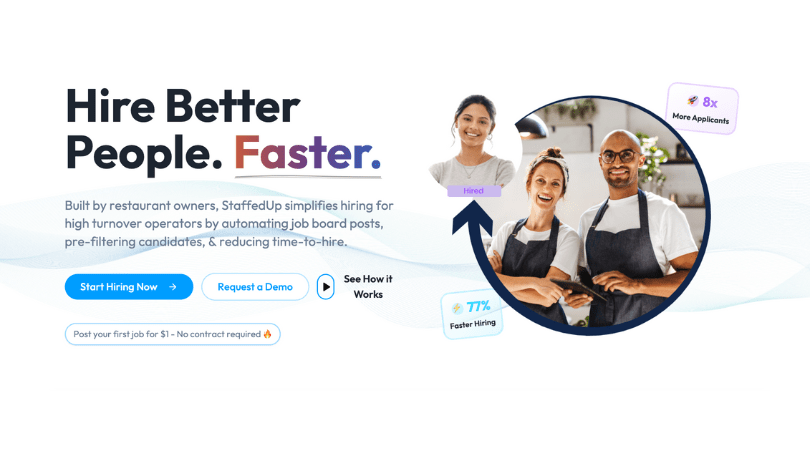
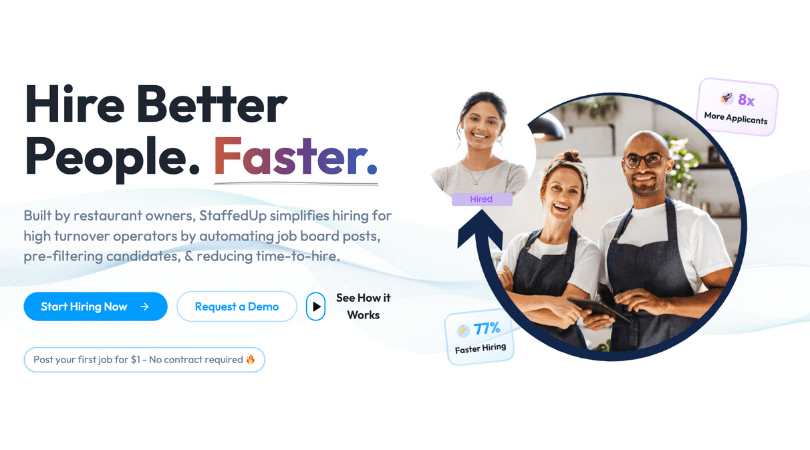
  • Hire faster – One click gets your job postings on multiple job boards like Indeed and Google Jobs. Restaurants using StaffedUp see up to 8x more applicants, which means fewer empty shifts and more chances to find the right candidates.
  • Stay organized – Applications, messages, interviews, and onboarding all live in one place. No more missed follow-ups or digging through your phone trying to remember who applied.
  • Screen smarter – Use filters and questions to prequalify candidates automatically. No more wasting time on people who can’t work weekends or ghost after the first message.
  • Text and schedule in seconds – Built-in tools let you message, set interviews, and send reminders fast. This leads to a 77% shorter time to hire for restaurants that use it.
  • Onboard without the paperwork mess – New hires complete everything digitally before day one. The result? A cleaner onboarding process and faster start times.
  • Reduce turnover and save money – Better screening leads to stronger hires, which is why StaffedUp users see up to a 45% drop in turnover. With WOTC tax credit support built in, you can get paid for hires you were already going to make.

StaffedUp isn’t just a platform. It’s the tool that helps you make better hiring decisions, keep your team full, and actually get ahead of the chaos.

Reach more applicants without more effort. Post your first job for just $1 with StaffedUp.

Bring in Better Applicants With StaffedUp

How StaffedUp improves the hiring process

Hiring in the restaurant industry isn’t getting easier, but the right tools make it manageable. A restaurant applicant tracking system simplifies the entire recruitment process so you can attract top talent, stay organized, and hire without stepping away from daily operations.

Instead of dealing with scattered applications and no-shows, you get a system that improves your applicant flow, supports your employer branding in hospitality, and saves time every week. You’ll spend less time sorting through unqualified leads and more time hiring the best candidates for your open positions.

StaffedUp is changing the game for restaurant hiring. From pushing job postings to popular job boards to improving the candidate experience and boosting applicant engagement, it’s a smarter way to run your recruiting efforts and reduce hospitality burnout.

If your goal is to build a stronger team of reliable restaurant employees, hold on to quality hires, and get ahead in a tough hiring market, it’s time to rethink your talent acquisition tools.

Start hiring better with StaffedUp. Post your first job for $1 today!

FAQs About Restaurant Applicant Tracking System

Do restaurants use ATS?

Yes, many restaurants now use an applicant tracking system to make their recruitment process easier and faster. It helps operators attract top talent, keep the application process organized, and fill open positions without stepping away from daily operations.

What is the most popular applicant tracking system?

While there are a few big names out there, most were built for corporate offices, not restaurants. StaffedUp stands out because it was designed for hospitality from day one. It focuses on applicant flow, candidate experience, and saving time for busy restaurant teams.

Which ATS is most reliable?

A reliable ATS is one that works the way your business does. StaffedUp is built specifically for restaurants, helping you post to popular job boards, organize new employees, and improve hospitality staff engagement without wasting hours. It’s built to handle high-volume restaurant operations and reduce costs from hiring delays.

What is ATS in hospitality?

In hospitality, an ATS is more than just software. It’s your hiring engine. It keeps your recruiting efforts on track by improving how you find, screen, and hire quality employees. You spend less time chasing down no-shows and more time bringing in the best candidates who fit your team. The benefits go beyond speed. It gives you the ability to stay organized, consistent, and in control of your hiring from start to finish.

How does an ATS help with job postings?

A restaurant ATS simplifies job postings by letting you create one listing and share it across multiple platforms at once. Instead of logging into each job board separately, you get your job in front of more people in less time, without the extra work. With StaffedUp, you can post to popular job boards like Indeed and Google Jobs in just one click.

Onboarding Tips to Ensure Your New Hires Stay

The hospitality industry is fast-paced, and high turnover is a common challenge. A well-structured onboarding process can make all the difference in whether new hires feel engaged, confident, and ready to contribute—or whether they leave within their first few months. Research from SHRM suggests that effective onboarding can improve employee retention by up to 82%.

The goal of onboarding isn’t just paperwork and training—it’s about creating a welcoming environment, setting clear expectations, and making employees feel like part of the team from day one.


1. Start Before Day One

Onboarding doesn’t begin on an employee’s first day—it starts the moment they accept the job offer. Sending a welcome email, providing digital paperwork in advance, or even offering a pre-start checklist can help new hires feel prepared.

A study from Harvard Business Review found that companies with pre-boarding initiatives saw higher engagement levels and faster ramp-up times. Simple steps like introducing new hires to their team via email or sharing insights about company culture can make a big impact.


2. Make the First Day Engaging, Not Overwhelming

The first day sets the tone for an employee’s entire experience. While it’s important to cover essential policies and procedures, avoid overwhelming new hires with too much information at once. Instead, balance formal training with interactive experiences like:

  • A team lunch or coffee meet-up
  • Shadowing a seasoned employee
  • A hands-on introduction to the role

Encouraging social connections early on fosters a sense of belonging, which is key to long-term retention.


3. Provide Clear Training and Ongoing Support

New hires should have structured training that covers job-specific skills, customer service expectations, and company values. But training shouldn’t stop after the first week—ongoing support ensures employees continue growing in their roles.

Assigning a mentor or “buddy” can be an effective way to provide continuous guidance. Employees who feel supported are more likely to stay and contribute to a positive workplace culture.


4. Gather Feedback and Adjust

Every team is different, and onboarding should be an evolving process. Regularly checking in with new hires to gather feedback can help identify areas for improvement. Simple pulse surveys or one-on-one meetings can reveal insights into how to refine the experience for future employees.


5. Streamline the Process with StaffedUp

A great onboarding experience starts with a smooth hiring process. StaffedUp helps hospitality businesses attract, hire, and retain top talent by providing a seamless platform for applicant tracking and communication. When hiring is efficient, employers can focus on what truly matters—building a team that stays.

Want to improve your hospitality hiring process? Visit StaffedUp.com to learn more.

The Future of Retail Hiring: Embracing Technology and Innovation

The future of retail hiring is rapidly evolving, driven by advancements in technology and a shift towards more innovative recruitment strategies. As the retail industry continues to transform, businesses must adapt to stay competitive. Embracing these changes can help attract top talent and streamline the hiring process.

The Role of Technology in Retail Hiring

Technology is at the forefront of the future of retail hiring. From data-driven recruitment tools to virtual interviews, technology is revolutionizing how retailers find and hire employees. These tools not only make the hiring process more efficient but also help in identifying the best candidates for the job.

For instance, StaffedUp can analyze resumes and rank top candidates to save time and the headache. This ensures that only the most qualified candidates are seen and ultimately make it on your team. Additionally, virtual interviews allow for a more flexible and convenient hiring process, especially for remote positions.

Innovation in Recruitment Strategies

Innovation is key to staying ahead in the competitive retail market. Companies are now leveraging data analytics to make informed hiring decisions. By analyzing trends and patterns, businesses can predict future hiring needs and adjust their strategies accordingly.

Moreover, the use of social media platforms for recruitment is on the rise. Platforms like LinkedIn are invaluable for connecting with potential candidates and showcasing your company culture. A strong LinkedIn presence can significantly enhance your recruitment efforts, making it easier to attract top talent.

The Benefits of Embracing Technology and Innovation
  1. Efficiency: Technology streamlines the hiring process, reducing the time and effort required to find the right candidates.
  2. Accuracy: AI-driven tools ensure that only the most qualified candidates are considered, improving the quality of hires.
  3. Flexibility: Virtual interviews and remote hiring options provide greater flexibility for both employers and candidates.
  4. Data-Driven Decisions: Analytics help in making informed hiring decisions, leading to better outcomes.

Preparing for the Future

To prepare for the future of retail hiring, businesses must embrace technology and innovation. This involves investing in the right tools and platforms, staying updated with the latest trends, and continuously improving recruitment strategies.

For more insights on the future of retail hiring, check out these resources:

In conclusion, the future of retail hiring lies in embracing technology and innovation. By staying ahead of the curve, businesses can attract top talent, improve efficiency, and remain competitive in the ever-evolving retail landscape.

How to Use Data Analytics in Hiring Decisions

In today’s competitive job market, making informed hiring decisions is crucial. Data analytics has emerged as a powerful tool to help organizations streamline their recruitment processes and make better hiring decisions. By leveraging data analysis, companies can gain valuable insights into candidate performance, reduce biases, and ultimately improve their hiring outcomes.

The Role of Data Analytics in Recruitment

Data analytics involves the systematic analysis of data to uncover patterns and insights. In the context of hiring, data analysis can help identify the most effective recruitment channels, predict candidate success, and optimize the overall hiring process. According to a report by Deloitte, companies that use data analytics in their hiring decisions are more likely to achieve higher employee retention and satisfaction rates1.

Benefits of Using Data Analytics in Hiring Decisions

  1. Improved Candidate Selection: Data analysis allows recruiters to assess candidates based on objective criteria, such as skills, experience, and cultural fit. This reduces the likelihood of biases and ensures that the best candidates are selected2.
  2. Enhanced Efficiency: By automating the screening process, data analysis can significantly reduce the time and effort required to review applications. This enables recruiters to focus on high-value tasks, such as interviewing and onboarding3.
  3. Better Business Outcomes: Companies that use data analysis in their hiring decisions are more likely to see improvements in employee performance and productivity. This can lead to better business outcomes and a stronger competitive advantage4.

How to Implement Data Analytics in Your Hiring Process

  1. Collect Relevant Data: Start by gathering data from various sources, such as resumes, job applications, and interview feedback. Ensure that the data is accurate and up-to-date.
  2. Use Analytical Tools: Leverage analytical tools and software to analyze the collected data. Tools like Applicant Tracking Systems (ATS) and Human Resource Information Systems (HRIS) can help streamline this process.
  3. Identify Key Metrics: Determine the key metrics that are most relevant to your hiring goals. These may include time-to-hire, cost-per-hire, and candidate quality.
  4. Analyze and Interpret Data: Use data to identify trends and patterns in your recruitment process. This can help you make data-driven decisions and continuously improve your hiring strategy.

Real-World Examples

Many leading companies have successfully implemented data analysis in their hiring processes. For instance, Google uses data analytics to predict candidate success and improve diversity in their workforce5Similarly, IBM leverages data analytics to identify the skills and attributes that are most predictive of employee success6.

Conclusion

Data analytics is transforming the way organizations make hiring decisions. By leveraging data-driven insights, companies can improve candidate selection, enhance efficiency, and drive better business outcomes. Try a tool like StaffedUp to embrace data analytics in your hiring process today and unlock the full potential of your recruitment strategy

The Role of AI in Modern Recruitment

The role of AI in modern recruitment is becoming increasingly significant as technology continues to evolve. AI is transforming the hiring landscape, making the recruitment process more efficient and effective. By leveraging AI in modern recruitment, companies can streamline their hiring processes, reduce bias, and improve the overall candidate experience.

How AI is Revolutionizing Recruitment

AI in modern recruitment is not just a buzzword; it’s a game-changer. From resume screening to candidate matching, AI tools are designed to handle repetitive tasks, allowing recruiters to focus on more strategic aspects of hiring. For instance, AI algorithms can quickly scan through thousands of resumes, identifying the best matches based on predefined criteria. This not only saves time but also ensures that no potential candidate is overlooked.

Enhancing Candidate Experience

One of the key benefits of AI in modern recruitment is the improvement in candidate experience. AI-powered chatbots can engage with candidates in real-time, answering their queries and providing updates on their application status. This level of engagement helps keep candidates informed and reduces the anxiety associated with the recruitment process.

Moreover, AI can personalize the recruitment experience. By analyzing data from previous interactions, AI can tailor communication and recommendations to each candidate, making them feel valued and understood.

Reducing Bias in Hiring

Bias in hiring is a significant concern for many organizations. AI in modern recruitment can help mitigate this issue by making data-driven decisions. AI algorithms are designed to evaluate candidates based on their skills and qualifications, rather than subjective factors. This helps create a more diverse and inclusive workforce.

However, it’s important to note that AI is only as unbiased as the data it is trained on. Therefore, companies must ensure that their AI systems are fed with diverse and representative data to avoid perpetuating existing biases.

Future Trends in AI Recruitment

The future of AI in modern recruitment looks promising. Here are some trends to watch out for:

  • Predictive Analytics: AI will increasingly use predictive analytics to forecast hiring needs and identify potential candidates before positions even open up.
  • Natural Language Processing (NLP): NLP will enhance AI’s ability to understand and interpret human language, making interactions with candidates more natural and effective.
  • AI-Powered Assessments: AI will be used to create more sophisticated assessments that evaluate candidates’ skills and cultural fit more accurately.

External Resources

For more insights on AI in recruitment, check out these resources:

In conclusion, the role of AI is transformative. By embracing AI, companies can enhance efficiency, improve candidate experiences, and build a more diverse workforce. As technology continues to advance, the possibilities for AI in recruitment are endless.

For more on AI in this space, check out the StaffedUp platform or reach out to a team member.

Top Interview Questions to Ask Candidates: Unlocking the Secrets to the Best Hires

Conducting interviews is a crucial step in finding the right talent for your organization. To help you make the most of this process, we’ve put together a list of essential interview questions, along with insights into what each question reveals about a candidate.

  1. Tell Me About Yourself
    • Why Ask This? This classic question serves as an icebreaker, allowing candidates to outline their professional journey. It’s a great way to assess their communication skills and see how they frame their experiences and achievements.
  2. Why Do You Want to Work Here?
    • Why Ask This? This question gauges the candidate’s interest and understanding of your company. Ideal answers will reflect thorough research and a genuine enthusiasm for the role.
  3. What Are Your Greatest Strengths?
    • Why Ask This? Understanding a candidate’s strengths helps determine if they have the skills needed for the position. Look for specific examples where their strengths have been effectively utilized.
  4. What Is Your Biggest Weakness?
    • Why Ask This? This question assesses self-awareness and honesty. Candidates who openly discuss their weaknesses and demonstrate efforts to improve are often more self-reflective and growth-oriented.
  5. Describe a Time When You Faced a Challenge at Work and How You Overcame It
    • Why Ask This? Behavioral questions like this offer insight into a candidate’s problem-solving abilities and resilience. Look for detailed examples that show how they handle adversity and learn from experiences.
  6. How Do You Prioritize Your Work?
    • Why Ask This? This question reveals a candidate’s time management and organizational skills. Effective answers should illustrate their ability to juggle multiple tasks and prioritize effectively.
  7. What Are Your Career Goals?
    • Why Ask This? Understanding a candidate’s long-term goals helps assess if they are likely to stay and grow within your company. Look for alignment between their ambitions and the opportunities your organization offers.
  8. How Do You Handle Feedback?
    • Why Ask This? This question evaluates a candidate’s openness to constructive criticism. Look for responses that indicate a willingness to receive feedback and make improvements.
  9. Can You Describe a Time When You Worked as Part of a Team?
    • Why Ask This? Teamwork is essential in most roles. This question helps you gauge how well candidates collaborate with others. Look for examples of effective communication, cooperation, and conflict resolution.
  10. Why Are You Leaving Your Current Job?
    • Why Ask This? This question provides insight into a candidate’s motivations and work values. Look for answers that focus on positive reasons for seeking new opportunities rather than negative comments about their current or past employers.
  11. What Do You Know About Our Company?
    • Why Ask This? This question tests the candidate’s preparation and interest in your organization. Look for responses that show they’ve researched your company’s mission, values, and recent achievements.
  12. How Do You Stay Updated with Industry Trends?
    • Why Ask This? This question assesses a candidate’s commitment to continuous learning and staying current in their field. Look for proactive approaches to acquiring new knowledge and skills.
  13. Describe a Time When You Took Initiative
    • Why Ask This? This question reveals a candidate’s ability to be proactive and take ownership of their work. Look for examples that demonstrate initiative and a willingness to go above and beyond.
  14. What Are Your Salary Expectations?
    • Why Ask This? While sensitive, this question helps ensure that the candidate’s expectations align with your budget. Look for flexibility and a willingness to discuss and negotiate terms.
  15. Do You Have Any Questions for Us?
    • Why Ask This? This gives candidates a chance to learn more about the role and your company, and it shows their level of engagement. Thoughtful questions indicate genuine interest and a serious consideration of the position.

By integrating these questions into your interview process, you’ll gain valuable insights into each candidate’s skills, experiences, and suitability for your organization. For tracking all of these applicant’s traits, check out StaffedUp’s hiring platform. Happy interviewing!

For more tips on effective interviewing and hiring strategies, check out this resource.

Hiring for Success in Missouri Cannabis

Original article can be found in Greenway Magazine here.

It’s no secret that cannabis in Missouri is on fire. While the rapid growth and competition continue to create more and more opportunities to scale your business, it’s absolutely essential to hire the right people to make sure you stay ahead of the curve. Some companies have their hiring protocols locked down, but for those of you who could use a little tune-up to ensure you’re getting enough of (the right) people on your team, we have some helpful resources.

Some major considerations that play a big role:

  • Properly marketing and communicating your job positions and expectations for each role.
  • Using automation to effectively distinguish between qualified and unqualified candidates.
  • Efficient hiring processes that decrease time spent in hiring while assisting you in making hiring decisions that positively affect your business.
  • Proper onboarding to get new hires trained and into your system quickly 

Properly marketing and communicating your job positions and expectations for each role

It goes without saying… It’s important to make sure you’re getting the right people for the right roles at the right time.

Being sure to clearly define what the perfect hire looks like in your operations will drastically improve the quality of your candidates, but without marketing the content effectively, you won’t get the eyes on the jobs to make the hires you need.  Leveraging hiring tools that allow you to customize your job descriptions and company culture while pushing your jobs to as many outlets as possible is the best way to accomplish this goal.  A single job database that helps you market and attract talent through multiple channels, including everywhere your brand lives, will keep your information consistent and get the maximum return on your time and money. 

Effectively distinguishing between qualified and unqualified candidates

  • Create standards and expectations for each position ahead of time to automatically qualify candidates who are a good fit for your company culture.
  • Use a system that can automatically sort candidates who are a good fit for the job into a qualified talent pool. 
  • Filter down between candidates who are a good fit for a specific role by spending a little extra time evaluating the relevant skills and experience they’ll need to have in order to excel in this role.
  • Last, but not least, look for candidates who are a good fit within your team and culture–and remember: there’s no such thing as “the perfect employee.” Every person has flaws and strengths; it’s up to you as an employer or manager to help mold them into someone great at their job!

Efficient hiring processes that decrease time spent in hiring while assisting you in making hiring decisions that positively affect your business

  • Use automated posts on job boards. Job boards are a great way to add additional candidates quickly and easily to your hiring pipeline. 
  • Use an applicant tracking system that allows you to track your applicants throughout the hiring process, allowing you to make informed decisions about who’s right for the job, without having to go back through old resumes and interviews again (which can be time-consuming).
  • Use referral programs as part of your recruitment strategy–they’re proven effective at increasing diversity, and will usually help you hire candidates that already fit into your current culture. 

Proper onboarding to get new hires trained and into your system quickly

It’s important to get new hires trained and into your system quickly. When hiring, you obviously want to make sure that the person is a good fit for the position you are trying to fill, but you also want to make sure that they are properly integrated into your company culture and systems.  

Having a smooth and easy-to-complete onboarding and outlined training protocol will be a major asset when it comes to getting that great new hire into their role smoothly.  Make sure to utilize tools that allow you to digitally send all new hire documentation, training manuals, and anything else they’ll need in their first weeks in their role.  This will establish full transparency and accountability for the onboarding process, and get your new hire ramped up to be as effective in their role as quickly as possible. 

To sum it up, if you’re looking to hire for success in Missouri cannabis, it’s critical that you know what you’re doing, and use tools to help you along the way. The industry is growing fast and there are plenty of opportunities out there for those who know how to navigate the hiring process properly. The first step is always knowing what kind of person fits into your culture.  Next comes knowing how best to market job positions so candidates feel compelled enough by what they see online or hear from friends who work there already; this way they’ll apply even before being contacted directly (as long as they meet all qualifications).

Lastly: keep things efficient by using proper onboarding processes that get new hires trained quickly while also helping HR make better hiring decisions overall.

Essential Skills for Back of House Workers: A Comprehensive Guide

Back of house workers play a crucial role in the smooth operation of a restaurant. While front of house workers interact directly with customers, back of house workers are responsible for the behind-the-scenes tasks that keep the restaurant running efficiently. They are the backbone of the operation, ensuring that food preparation, cooking, and cleaning are done effectively and in a timely manner.

Back of house workers are typically found in the kitchen area, where they work alongside chefs, cooks, and other kitchen staff. They are responsible for tasks such as food preparation, cooking, plating, and ensuring that all food items meet the restaurant’s quality standards. They also handle cleaning and sanitizing duties, maintaining a clean and organized work environment.

In addition to their technical skills, back of house workers are expected to possess certain personal qualities that contribute to their success in the role. These qualities include a strong work ethic, attention to detail, the ability to work in a fast-paced environment, and a commitment to teamwork and collaboration. By understanding the role of back of house workers and the skills required, you can effectively hire the best candidates for these positions and ensure the success of your restaurant.

1. Culinary Skills: The Foundation for Success

Culinary skills are at the core of the back of house workers’ role. These skills include knowledge of food preparation techniques, cooking methods, and the ability to handle kitchen equipment effectively. Back of house workers should be familiar with various cooking techniques such as grilling, sautéing, baking, and frying. They should also have a good understanding of different ingredients and their uses in various dishes.

In addition to cooking skills, BOH workers should also possess knife skills, as cutting and chopping ingredients is a fundamental part of their job. They should be able to handle knives safely and efficiently, ensuring precision and consistency in their cuts.

Continuous learning and improvement are also essential in the culinary field. Back of house workers should stay updated with the latest trends and techniques in the culinary world, attending workshops or training sessions to enhance their skills. By investing in their culinary skills, back of house workers can contribute to the success of the restaurant and deliver high-quality food to customers.

2. Time Management: Efficiently Handling the Back of House Operations

Time management is crucial to ensure the smooth operation of the kitchen. They are often working under tight deadlines, especially during peak hours, and need to manage their time effectively to meet customer demands and maintain a steady workflow.

BOH should have the ability to prioritize tasks and work efficiently to avoid delays. They should be able to multitask and handle multiple orders simultaneously, ensuring that each order is prepared and cooked in a timely manner. By managing their time effectively, they can contribute to the overall efficiency of the restaurant and ensure that customers receive their food promptly.

To improve time management skills, back of house workers can use tools such as timers and schedules to stay organized and on track. They should also communicate effectively with other kitchen staff to coordinate tasks and avoid any bottlenecks in the workflow. With strong time management skills, back of house workers can handle the fast-paced environment of a restaurant kitchen and meet customer expectations.

3. Attention to Detail: Ensuring Accuracy and Consistency

Attention to detail is a critical skill as it ensures that food items are prepared and presented with accuracy and consistency. From measuring ingredients to plating dishes, every step requires precision and attention to detail.

Back of house workers should follow recipes and instructions carefully, ensuring that the correct ingredients and quantities are used. They should pay attention to cooking times and temperatures to achieve the desired results. Additionally, they should have an eye for presentation, arranging and garnishing dishes in an appealing and consistent manner.

Attention to detail also extends to cleanliness and hygiene. Back of house workers should maintain a clean and organized work area, following proper sanitation practices and food safety guidelines. By paying attention to the smallest details, back of house workers contribute to the overall quality of the food and ensure customer satisfaction.

4. Teamwork and Communication: Collaborating for Seamless Operations

Teamwork and communication are essential skills as they often work in a fast-paced and high-pressure environment. They need to collaborate seamlessly with other kitchen staff to ensure efficient operations and deliver exceptional food to customers.

Back of house workers should have strong communication skills, both verbal and non-verbal. They should be able to effectively communicate with chefs, cooks, and other staff members to coordinate tasks, share information, and address any issues that may arise. Clear and concise communication helps to avoid misunderstandings and ensures that everyone is on the same page.

In addition to communication, teamwork is crucial in a kitchen setting. Back of house workers should be able to work well with others, respecting and supporting their colleagues. They should be open to feedback and willing to help out when needed. By fostering a collaborative and supportive work environment, back of house workers contribute to a positive and efficient kitchen culture.

5. Adaptability and Problem-Solving: Navigating Challenges in a Fast-Paced Environment

Adaptability and problem-solving skills are vital, as they often encounter challenges in a fast-paced environment. They need to be able to think quickly on their feet and find solutions to unexpected situations.

Back of house workers should be adaptable and flexible, as the demands of a restaurant can change rapidly. They should be able to adjust their workflow and priorities based on the needs of the kitchen and the customer demand. This may involve multitasking, reorganizing tasks, or finding alternative solutions when ingredients or equipment are not available.

Problem-solving skills are also essential in the back of house role. When faced with challenges such as equipment malfunctions or ingredient shortages, back of house workers should be able to find creative solutions and work around the obstacles. They should have a proactive mindset and be resourceful in finding alternatives to ensure that operations run smoothly.

By being adaptable and having strong problem-solving skills, back of house workers can navigate challenges effectively and contribute to the success of the restaurant.

Frequently Asked Questions

  • How does StaffedUp find applicants for me?

    StaffedUp leverages our extensive talent networks, optimized SEO, external automated job board posting such as Indeed and Google Jobs, social media integrations, QR code scan to apply marketing, and by leveraging your website and brand to drive genuinely motivated applicants for hire.

  • Can I customize StaffedUp to hire the way I need to?

    100% your can. We offer complete customization to fit your exact needs. Create custom company recruitment pages, company culture, jobs, application questions, and customized automated or one click messaging to expedite engagement.

  • How long does it take to get set up?

    How's a few minutes sound? Our quick startup tools are the easiest thing you'll use all year! We provide pre-drafted job descriptions & application questions, & even wrote your application responses for you! Need a hand? We'll teach you everything you need to know in 10 minutes. Did we mention it's easy?

  • Can I cancel anytime?

    Yep! For paid accounts we simply ask for 15 day notice before you next bill. Need to chat with us? Use the help desk in your account or email us at support@staffedup.com.

  • What is the WOTC (Work Opportunity Tax Credit)?

    WOTC (Work Opportunity Tax Credit) is a federal tax credit available to business employers, both large and small. The credits are designed to offset Federal income tax liabilities. When the WOTC program is executed the right way, employers can capture enough tax credits to significantly reduce, or even eliminate, their Federal income tax liabilities. (And if your business was formed using a flow-through-entity, like a S-corp or LLC, then the credits could flow-through to the owner’s K-1).

  • How can WOTC impact my business?

    Executing the WOTC program is simple and easy with the right provider. We’ll screen your applicants to determine if they satisfy one of nine qualifying criteria. If so, our team of tax credit experts work with specific government agencies, behind the scenes, to capture the tax credits for you. Once captured, tax credits can be used to eliminate Federal income tax liabilities and thus improve cash flow for stakeholders and the business.

  • DID WE JUST BECOME BEST FRIENDS?

    Duh! We built this for you, because we are you! Your success in hiring is the only thing we care about. Anything you need, any time, we're always here, we'll always listen!