
Comprehensive Host Job Description: Duties, Skills, and Expectations
Introduction to Host Role
A clear host job description is essential for restaurants that want to create a strong first impression and keep service running smoothly. The host is often the first person guests interact with, which makes this role a key part of the overall dining experience.
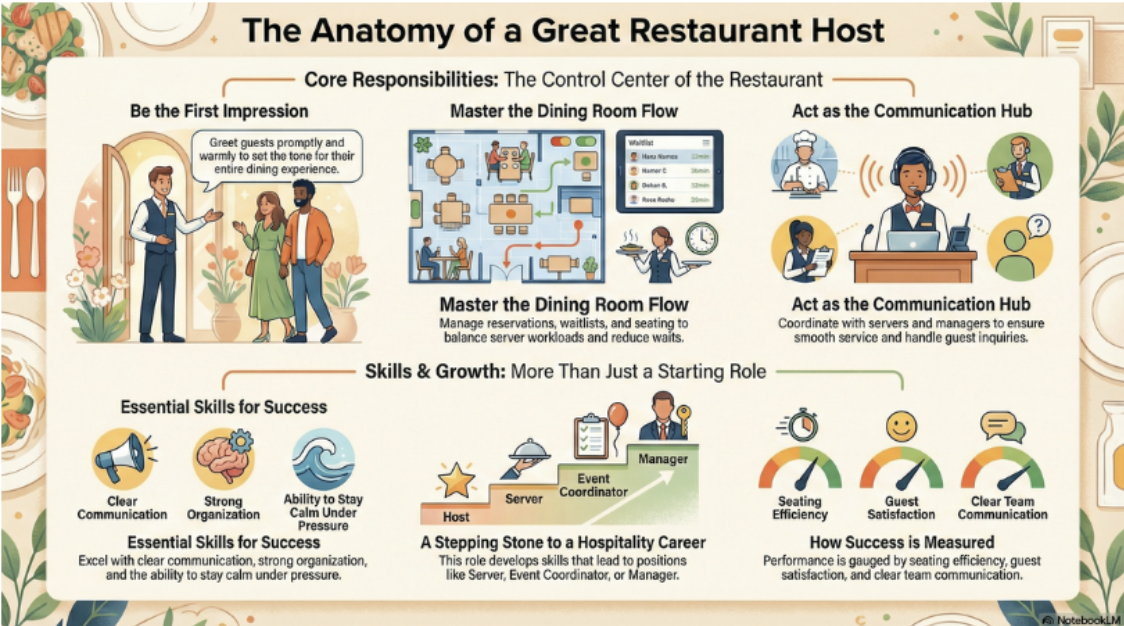
Hosts are responsible for greeting guests, managing reservations, coordinating seating, and communicating with servers and managers. From the moment guests walk in until they are seated, the host helps set expectations and control the flow of the dining room.
The host job requires excellent communication skills, a calm and friendly attitude, and the ability to work in a fast-paced environment. Strong hosts stay organized, manage waitlists accurately, and handle guest requests without letting the dining room fall behind.
A well-written host job description helps attract candidates who understand that this role is about more than saying hello. It is about managing people, pacing service, and supporting the entire front-of-house team. Many restaurants also use tools like StaffedUp to post host roles, review applicants, and keep front-of-house hiring organized across shifts or locations. Teams that want a repeatable approach often start with a documented hiring plan and clearer expectations across restaurant staff positions.
Hostess Job Description
A strong hostess job description outlines the responsibilities that keep the front of the restaurant organized and welcoming. Hosts and hostesses play a major role in guest satisfaction by managing seating, handling reservations, and supporting servers during busy shifts.
Hostess duties focus on organization, communication, and guest interaction. This role requires staying calm under pressure while keeping the dining room flowing at the right pace.
Restaurants that define this role clearly tend to hire faster, improve front-of-house staffing, and see fewer service issues tied to unclear restaurant management expectations. Clear role definition also supports better guest experience from the moment guests arrive.
Core Hostess Duties
Most hostess job descriptions include the following responsibilities:
- Greeting guests promptly and warmly
- Managing reservations and waitlists
- Seating guests efficiently and fairly
- Answering phone calls and handling basic inquiries
- Presenting clean menus to guests
These tasks help guests feel acknowledged and cared for from the moment they arrive. Clear role definition also helps restaurants avoid reactive hiring, reduce front-of-house turnover, and build a high-performing team.
Managing Seating and Guest Flow
One of the most important hostess responsibilities is controlling the dining room flow.
This includes:
- Spacing tables to support service speed
- Communicating wait times clearly
- Adjusting seating plans during busy periods
Strong seating decisions help servers perform better and reduce guest frustration. Restaurants that prioritize guest flow often improve table utilization, lower labor costs, and support healthier restaurant metrics during peak hours.
Handling Guest Concerns
Hosts and hostesses are often the first to hear guest feedback.
They may need to:
- Address seating requests or delays
- Respond calmly to guest concerns
- Communicate issues to managers when needed
Professional responses help protect the guest experience even during busy times. Strong communication at the host stand supports better cultural fit, improves employee professionalism, and reinforces a positive workplace culture.
Presentation and Professionalism
Hosts represent the restaurant at the front door.
Expectations often include:
- Maintaining a clean and professional appearance
- Keeping the host stand organized
- Staying attentive even during slower periods
Clear hostess expectations help candidates understand the importance of the role.Restaurants that set these standards early often onboard faster by using structured onboarding checklists, clear job expectations, and consistent front-of-house training.
Restaurants that clearly define hostess duties often onboard faster and experience fewer service issues. Many teams manage host job descriptions, applications, and scheduling details in one place using tools like StaffedUp to keep front-of-house hiring simple and consistent.
Event Host Job Description
An event host job description focuses on managing guest flow and service during special events, private parties, or large group reservations. While the core host duties remain the same, event hosts take on added responsibility due to higher guest volume and tighter timelines.
Restaurants that run frequent events benefit from clear event staffing plans, structured guest coordination, and reliable communication tools.
Event Host Responsibilities
Event hosts are often responsible for:
- Greeting guests as they arrive for events
- Coordinating seating for large parties
- Managing event-specific reservations and timelines
- Answering guest questions about the event
- Communicating with servers and managers throughout service
Clear coordination helps prevent confusion during high-traffic moments and aligns with strong restaurant communication, effective staff scheduling, and proactive service planning.
Supporting Event Flow
Unlike standard service, events often follow a fixed schedule.
Event hosts must be able to:
- Seat guests according to event plans
- Adjust quickly if guests arrive early or late
- Communicate timing changes to staff
Staying organized helps the event run smoothly and keeps guests satisfied by reducing service bottlenecks, improving team coordination, and strengthening event execution.
Skills That Matter for Event Hosts
Successful event hosts typically have:
- Strong organizational skills
- Clear communication
- Ability to stay calm under pressure
- Attention to guest needs
These skills help event hosts manage higher expectations and support hospitality career growth, ongoing professional development, and long-term team retention.
Restaurants that host frequent events benefit from clear event host job descriptions. Many teams keep event staffing, applications, and scheduling organized using tools like StaffedUp to avoid last-minute gaps.

Hostess Job Description Template
A clear hostess job description template helps restaurants attract candidates who understand the responsibility and pace of the role. Many teams build templates alongside clear
job descriptions, consistent hiring workflows, and standardized front-of-house roles.
This template should be simple, direct, and tailored to how your restaurant operates.
Key Duties to Include
A strong hostess or host job description template should list core duties such as:
- Greeting guests as they arrive
- Managing reservations and waitlists
- Seating guests based on table availability
- Answering phone calls and basic guest questions
- Coordinating with servers and managers
Clear duties help candidates understand the role and support better candidate quality, smoother restaurant onboarding, and more consistent service execution.
Required Skills and Qualifications
Most host job descriptions include requirements like:
- Excellent communication skills
- Friendly and professional attitude
- Ability to stay organized during busy shifts
- Comfort working in a fast-paced environment
- High school diploma or equivalent
Defining requirements upfront supports better skills alignment, reduces early turnover, and improves hiring outcomes.
Work Environment and Expectations
Candidates should know what to expect before applying.
Include details such as:
- Standing for long periods
- Working nights, weekends, and holidays
- Managing high guest volume during peak hours
Clear expectations reduce early turnover and missed shifts.
Customizing the Template for Your Restaurant
Every restaurant operates differently. Your host job description template should reflect:
- Restaurant size and style
- Reservation systems used
- Event or private dining needs
Restaurants that customize job descriptions tend to hire better fits. Many teams also keep job templates, postings, and applications organized using tools like StaffedUp to stay consistent across front-of-house roles.
Hostess Job and Career Development
The host job description should make it clear that this role offers more than a starting position at the front door. Hosting is often the first step in a longer hospitality career, giving employees direct exposure to guest service, restaurant flow, and front-of-house operations.
Hosts develop skills that are valuable across the restaurant, especially communication, organization, and problem-solving. These skills are closely tied to long-term hospitality career growth and help prepare employees for expanded responsibilities as they move through different restaurant staff positions.
Clear job descriptions and visible growth paths help attract candidates who want to stay and grow. Restaurants that invest in development often see better retention and stronger performance by supporting ongoing restaurant professional development across front-of-house roles.
Skills Hosts Build on the Job
Working as a host helps employees strengthen:
- Guest communication and service awareness
- Time management during busy shifts
- Coordination with servers, managers, and kitchen staff
- Handling guest concerns calmly and professionally
These skills prepare hosts for higher-responsibility roles and help them succeed in fast-paced environments. Hosts who develop strong communication and organization often stand out during performance reviews and internal promotions tied to broader hospitality hiring retention strategies.
Many of these competencies also overlap with the top soft skills employers look for in hospitality candidates and support long-term growth through structured restaurant professional development programs.
Common Advancement Paths
Many hosts move into other front-of-house positions, including:
- Server
- Lead host or host supervisor
- Event coordinator
- Shift leader
With experience, some hosts transition into management roles where they oversee guest flow, staffing, and service standards. Restaurants that outline these pathways often improve retention and internal promotions by supporting structured restaurant professional development and tracking progression across different restaurant staff positions.
Why Hosts Matter for Long-Term Team Growth
Restaurants that support host development often see better retention. Hosts who understand the full guest journey tend to perform better as servers or supervisors later on.
Clear job descriptions and growth paths help attract candidates who want to stay and grow. Teams that invest early in development typically experience stronger employee retention and more consistent performance across the front-of-house.
Many restaurants also improve long-term outcomes by pairing growth paths with a clear restaurant hiring strategy and tracking progression using organized front-of-house staffing systems.
Work Environment and Shift Expectations
A strong host job description should clearly explain the work environment and scheduling expectations so candidates know what the role feels like before they apply. Hosting is a front-facing position that requires energy, focus, and consistency throughout each shift.
Hosts work in active dining rooms where guest volume can change quickly. During peak hours, the host stand becomes the control center of the restaurant. Hosts manage arrivals, quote wait times, coordinate seating, and communicate constantly with servers and managers. The pace can shift from calm to busy in minutes, making strong front-of-house communication and clear staff coordination especially important.
Restaurants that clearly outline the work environment tend to hire candidates who are better prepared for the pace and expectations of the role. Clear communication around shift demands also supports stronger restaurant management and fewer early drop-offs.
Physical Expectations of the Host Role
Hosting is a physically active job. Hosts are usually expected to:
- Stand for long periods
- Walk guests to tables repeatedly
- Manage menus, seating charts, or tablets
- Remain alert at the host stand throughout service
Being comfortable on your feet and able to stay engaged for an entire shift is important.
Scheduling and Availability
Most host roles require flexible availability. Schedules often include:
- Evenings and weekends
- Holidays
- Peak dining hours
Some restaurants may rotate hosts between opening and closing shifts. Clear scheduling expectations in the job description help reduce call-outs and early turnover. Restaurants that plan schedules intentionally often rely on clear staff scheduling practices, realistic coverage during peak periods, and consistent front-of-house staffing. Setting expectations early also supports better restaurant management and more reliable shift coverage.
Why Environment Clarity Matters
When hosts understand the pace and demands upfront:
- Training is smoother
- Fewer early quits occur
- Service stays more consistent
Restaurants that clearly outline work conditions tend to hire hosts who are better prepared for the role. Many teams also manage schedules, applications, and availability more easily when hiring is centralized through tools like StaffedUp.

Performance Expectations and Success Metrics for Hosts
Beyond daily duties, a well-written host job description should explain how performance is measured. Hosts perform best when they know what success looks like and how their role impacts the rest of the restaurant.
Hosting is not just about greeting guests. It directly affects table turns, server workload, and guest satisfaction. Restaurants that define performance clearly often track key restaurant metrics tied to seating efficiency and guest flow.
Clear performance standards also support better coaching and accountability. Many teams use structured restaurant management practices and consistent hiring processes to reinforce expectations across front-of-house roles.
What Strong Host Performance Looks Like
Successful hosts consistently:
- Greet guests promptly and professionally
- Quote accurate wait times
- Seat tables in a way that balances server sections
- Keep the host stand organized
- Communicate clearly with servers and managers
These habits help service run smoothly, even during busy periods.
Guest Experience Metrics
Hosts are often evaluated on guest-facing factors such as:
- First impressions and friendliness
- Ability to manage guest expectations
- Handling of waitlist frustrations
- Professional response to guest concerns
A calm and clear host can turn a long wait into a positive experience. Restaurants that focus on these touchpoints often see improvements in overall guest satisfaction and stronger restaurant management outcomes tied to service consistency.
Clear guest experience standards also support better alignment with restaurant metrics and help teams reinforce a positive workplace culture across the front-of-house.
Operational Metrics
From an operations standpoint, hosts may also be measured by:
- Seating efficiency
- Table utilization
- Accuracy of reservations and waitlists
- Communication with the floor team
Good hosts help avoid server overload and uneven pacing.
Reliability and Team Contribution
Reliability matters just as much as skill. Hosts who show up on time, stay focused, and support teammates are often trusted with more responsibility.
Managers often look for:
- Consistent attendance
- Willingness to assist during busy shifts
- Readiness to adapt when plans change
Hosts who perform well often move into lead host, server, or supervisory roles.
Clear performance expectations help hosts grow faster and help managers coach more effectively. Restaurants that track performance notes, training, and role progression in one system often manage teams more smoothly. Many do this by keeping host hiring and staffing organized through platforms like StaffedUp.
FAQs: Host Job Description
What are the main responsibilities of a restaurant host?
Hosts greet guests, manage reservations and waitlists, seat tables efficiently, and coordinate with servers and managers.
Do hosts need prior restaurant experience?
Experience is helpful but not always required. Many restaurants train hosts who show strong communication skills and reliability.
What skills should a good host have?
Organization, clear communication, calm under pressure, and a friendly attitude are key skills.
Is hosting an entry-level restaurant role?
Yes. Hosting is often an entry point that leads to server, event, or management roles.
How can restaurants hire reliable hosts faster?
Clear job descriptions and organized hiring processes help. Many teams use StaffedUp to post host jobs, review applicants, and keep hiring consistent.

Hire Smarter, Faster
StaffedUp simplifies hiring for restaurant & hospitality operators. Post your first job for $1.