Top Hospitality Resume Example & Tips for Landing Your Dream Job
Introduction to Hospitality Resumes
A strong hospitality resume example shows hiring managers that you understand service, people, and performance. In the hospitality industry, resumes must balance professional experience with interpersonal skills like communication, problem solving, and guest care—qualities closely tied to successful hospitality hiring.
Hospitality employers move fast. They want to see, within seconds, that you can support guest satisfaction, work well with teams, and handle real-world service situations. That’s why starting with a clear, well-written resume matters so much, especially in a competitive hospitality job market.
For many job seekers, a focused hospitality resume objective or summary is the best way to stand out early. It quickly explains who you are, what role you’re targeting, and how your experience fits the job. Whether you’re applying for a front desk role, management position, or guest relations job, your resume should reflect a clear commitment to guest services and service quality—skills often emphasized in modern hospitality hiring trends.
This guide walks through practical tips, real hospitality resume examples, and role-specific advice to help you build a resume that gets noticed. Many applicants also use StaffedUp’s free resume generator to turn their hospitality experience into a clean, professional resume that aligns with proven standout resume tips without guessing what hiring managers want to see.
Choosing the Right Format
Choosing the right format is a key step when building a strong hospitality resume example. The format you use affects how quickly hiring managers understand your experience and how well your resume performs in applicant tracking systems.
Reverse-Chronological Format
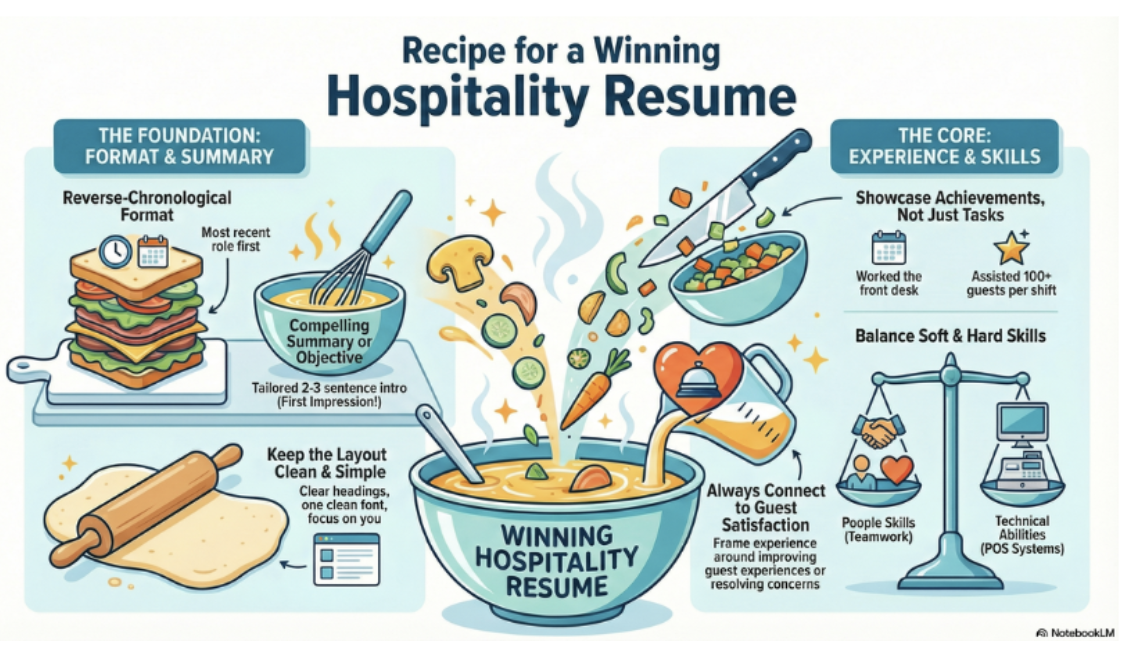
The reverse-chronological format is the most common and widely accepted format in hospitality. It lists your most recent role first and works best if you have steady experience in hotels, restaurants, or guest services.
This format is ideal if you:
- Have consistent hospitality experience
- Want to show career growth
- Are applying for management or senior roles
Hiring managers prefer this format because it clearly shows where you’ve worked and what you’ve done most recently, which supports faster evaluation in structured hospitality hiring environments.
Combination Resume Format
The combination format blends skills and work history. It works well for:
- Entry-level candidates
- Career changers
- Applicants reentering the workforce
This format lets you highlight customer service, guest relations, and transferable skills before listing job history, which is especially helpful when navigating a transition within the broader hospitality industry.
Keep the Layout Clean and Simple
No matter the format, your resume should be easy to read:
- Use clear section headings
- Stick to one clean font
- Avoid graphics or heavy design
A simple layout keeps the focus on your experience and skills.
Many applicants use StaffedUp’s free resume generator to automatically select the right hospitality resume format based on their experience level and target role, helping streamline an active job search.
Writing a Compelling Summary
Your summary sits at the top of your resume and is one of the most important parts of a strong hospitality resume example. Hiring managers often decide whether to keep reading based on this short section alone, especially in a competitive hospitality job market.
What a Strong Hospitality Summary Does
A good summary quickly answers three questions:
- Who are you professionally?
- What hospitality experience do you have?
- What value do you bring to guests and the business?
Keep it short and specific. Two to three sentences is ideal, which also helps summaries perform better in applicant tracking systems.
Include Your Role and Experience Level
Be clear about the type of role you’re targeting and your background.
Example:
Hospitality professional with 5 years of experience in hotel and restaurant environments, known for strong guest service, teamwork, and reliability during high-volume shifts.
This helps hiring managers instantly understand your fit and aligns with expectations outlined in modern hospitality hiring trends.
Focus on Guest Satisfaction and Results
Hospitality employers care about outcomes. If possible, mention how your work helped guests or operations.
Examples:
- Improved guest satisfaction during peak periods
- Supported smooth daily operations
- Trusted to handle guest concerns
These details show impact, not just duties, and reflect the top soft skills employers value most.
Tailor the Summary for Each Job
Adjust your summary slightly for different roles. A front desk role should focus on guest interaction. A management role should focus on leadership and operations.
Many applicants use StaffedUp’s free resume generator to quickly adjust their summary for different hospitality jobs without rewriting their entire resume, making it easier to stay active in an ongoing job search.
Resume Objective
A hospitality resume objective is helpful if you’re new to the hospitality industry, changing careers, or returning to work after time away. In a strong hospitality resume example, the objective clearly explains your career direction and what you bring to an employer.
When to Use a Resume Objective
Use an objective instead of a summary if you:
- Have limited hospitality experience
- Are switching into hospitality from another industry
- Are a student or recent graduate
The objective helps hiring managers understand your intent and potential, particularly when evaluating candidates in broader hospitality recruitment pipelines.
What to Include in a Hospitality Resume Objective
A good objective should be specific and role-focused. It should mention:
- The type of hospitality role you want
- Relevant skills or strengths
- Your commitment to guest service
Example:
Customer-focused professional seeking a hospitality role where strong communication, teamwork, and guest service skills can support positive guest experiences.
Clear objectives help resumes perform better when screened by applicant tracking systems.
Avoid Generic Statements
Avoid vague lines like “seeking a challenging role.” These don’t help employers understand your value.
Instead, focus on how you can support guests, teams, or daily operations—qualities emphasized in effective hospitality staffing.
Tailor It to the Job
If you’re applying for front desk, guest relations, or hotel roles, adjust the objective to reflect that environment.
Many job seekers use StaffedUp’s free resume generator to write clear, role-specific resume objectives that match hospitality job descriptions and reflect proven standout resume tips.
Highlighting Work Experience
Your work experience section is the most important part of any strong hospitality resume example. This is where hiring managers look for proof that you can handle guests, support operations, and perform well in real hospitality settings, especially in a competitive hospitality job market.
Focus on Achievements, Not Just Tasks
Avoid listing every responsibility you had. Instead, focus on what you accomplished and how your work helped guests or the business.
Strong experience bullets:
- Show results
- Highlight guest impact
- Reflect responsibility and trust
Weak example:
- Worked front desk shifts
Stronger example:
- Supported front desk operations by assisting guests, handling check-ins, and resolving service issues during peak hours
This results-first approach aligns with how hiring managers evaluate candidates across modern hospitality recruitment workflows.

Lead With Your Most Relevant Experience
Put your most relevant hospitality role first and use 3–5 bullet points per position. If you’ve worked multiple roles, prioritize those closest to the job you’re applying for.
Roles to highlight clearly:
- Front desk agent
- Concierge
- Restaurant manager
- Hotel supervisor
- Guest services associate
Clear prioritization helps resumes perform better in applicant tracking systems and speeds up manager review.
Use Numbers When Possible
Numbers help hiring managers understand scale and impact.
Examples:
- Assisted 100+ guests per shift
- Coordinated events for up to 200 guests
- Managed a team of 15 staff members
- Improved guest satisfaction scores by 15%
Quantifying experience supports stronger evaluations tied to real-world hospitality performance metrics.
Show Guest-Focused Impact
Hospitality resumes should always tie experience back to guest satisfaction.
Examples:
- Resolved guest concerns to support positive experiences
- Provided personalized guest assistance
- Supported smooth daily operations during high-volume periods
Many applicants use StaffedUp’s free resume generator to turn daily hospitality work into clear, results-focused bullet points that hiring managers want to see while staying aligned with proven standout resume tips.
Education and Certifications
Education and certifications help support a strong hospitality resume example by showing training, professionalism, and commitment to the industry. While hands-on experience matters most, the right credentials can give you an edge in competitive hospitality hiring.
How to List Education on a Hospitality Resume
List your highest level of education first. Keep it simple and relevant.
Include:
- Degree or diploma earned
- School name
- Field of study (if relevant)
Example:
- Bachelor’s Degree in Hospitality Management
- Associate Degree in Business Administration
- High School Diploma or equivalent
If you’re early in your career, education may appear above work experience.
Hospitality Certifications That Stand Out
Certifications show readiness and responsibility, especially in guest-facing or management roles.
Common hospitality certifications include:
- Food safety or food handler certification
- Alcohol service certification
- Certified Hotel Administrator (CHA)
- Food and beverage management training
Only include certifications that relate to the role you’re applying for, particularly those tied to compliance and food safety standards.
Training and Ongoing Learning
If you’ve completed internal training, leadership programs, or hospitality workshops, list them briefly. This shows growth and reliability.
Example:
- Completed guest service training program
- Participated in leadership development workshops
Many job seekers use StaffedUp’s free resume generator to place education and certifications correctly so they support the resume without taking attention away from experience and while staying aligned with active job search best practices.
Key Skills and Proficiencies
A strong hospitality resume example includes a balanced mix of soft skills and hard skills. Hiring managers want to see that you can work with people just as well as you can handle systems, processes, and daily operations—skills that consistently rank high across hospitality hiring trends.
Soft Skills That Matter in Hospitality
Soft skills are essential in guest-facing roles. These skills show how you interact with guests and coworkers.
Common hospitality soft skills include:
- Customer service and guest care
- Communication and active listening
- Problem solving
- Teamwork and collaboration
- Adaptability during busy shifts
These skills should also appear naturally in your work experience bullets, not just in a list, and closely align with the top soft skills employers look for in hospitality roles.
Hard Skills and Technical Abilities
Hard skills show that you understand the tools and standards of the hospitality industry.
Examples of hospitality hard skills:
- Front desk operations
- Reservation systems and POS systems
- Event coordination
- Food and beverage service
- Staff scheduling and shift support
Only include skills that match the job you’re applying for so your resume stays relevant and performs well in hospitality recruitment pipelines.
Use Job Description Language
Pull skill keywords directly from the job posting and include them where they fit naturally. This helps with both hiring managers and applicant tracking systems, which scan resumes for role-specific terms.
Many applicants rely on StaffedUp’s free resume generator to identify the right hospitality skills and organize them clearly without overcrowding the resume, following proven standout resume tips.
Job Search
Once your hospitality resume example is ready, the next step is using it the right way during your job search. A strong resume only works if it reaches the right employers and clearly matches the role you want, especially in a competitive hospitality job market.
Where to Look for Hospitality Jobs
Hospitality roles move fast, so timing and visibility matter.
Effective places to search include:
- Restaurant and hotel career pages
- Hospitality-focused job boards
- Local restaurant groups and hotel brands
- Referrals from past coworkers or managers
Applying early often increases response rates, particularly during active hospitality hiring cycles.
How to Apply With Confidence
Each application should feel intentional.
Best practices:
- Match resume language to the job posting
- Adjust your summary and skills for each role
- Keep your resume to one page when possible
- Follow up politely after 3–5 days
Small changes can make a big difference in getting interviews.
Networking Still Matters
Many hospitality roles are filled through referrals.
Ways to build connections:
- Stay in touch with former managers
- Let coworkers know you are open to new roles
- Attend hospitality job fairs or local events
- Keep your online profiles current
A short message and a clean resume often open doors. Many applicants use StaffedUp’s free resume generator to quickly customize resumes for different hospitality roles without starting from scratch each time, which helps maintain momentum during an active job search.

Hospitality Career
Building a successful hospitality career takes more than experience alone. Employers look for consistency, growth, and a clear commitment to guest service. A strong hospitality resume example should show how your career has progressed and where you want it to go next, especially in a competitive hospitality job market.
Starting and Growing in Hospitality
Many hospitality professionals begin in entry-level roles and move up through experience.
Common career paths include:
- Host → Server → Supervisor
- Front desk agent → Lead agent → Front office manager
- Line staff → Assistant manager → General manager
Each role builds skills that matter at the next level, such as communication, problem solving, and leadership. Clear progression signals long-term potential and aligns with common hospitality career growth paths employers look for.
Skills That Support Long-Term Growth
Hospitality careers reward people who develop both people skills and operational skills.
Important skills to build over time:
- Guest communication and service recovery
- Team coordination and training
- Time management during busy shifts
- Adapting to fast-paced environments
These skills should appear clearly on your resume as you grow and reflect the top soft skills employers value across hospitality roles.
Using Your Resume as a Career Tool
Your resume should evolve with your career.
Tips:
- Update it after promotions or new responsibilities
- Add results, not just duties
- Remove early roles once they are no longer relevant
- Adjust language as you move toward leadership roles
Treating your resume as a living document helps you stay ready for new opportunities and perform better in modern hospitality recruitment processes.
Many professionals rely on StaffedUp’s free resume generator to keep their resume current as their hospitality career grows, without rewriting it from scratch each time, which supports momentum during an active job search.
Frequently Asked Questions About Hospitality Resume Examples
What is a hospitality resume example?
A hospitality resume example shows how a resume should look for jobs in hotels, restaurants, and guest service roles. It helps applicants understand formatting, wording, and what skills to highlight.
Should I use a resume example or a resume template?
A resume example shows what to include. A resume template helps you build it faster. Many applicants review examples first, then use a template or resume generator to create their own version.
How long should a hospitality resume be?
Most hospitality resumes should be one page. Managers prefer clear, easy-to-scan resumes that highlight experience, skills, and results without extra filler.
Do I need different resumes for different hospitality jobs?
Yes. A front desk resume should focus on guest service and scheduling. A management resume should highlight leadership and operations. Small changes can improve interview chances.
What if I have no hospitality experience?
Use a resume objective and focus on transferable skills like customer service, teamwork, reliability, and communication. Entry-level hospitality roles value attitude and consistency.
How can I create a hospitality resume fast?
Many applicants use StaffedUp’s free resume generator to turn a hospitality resume example into a polished resume in minutes, without worrying about formatting.

Hire Smarter, Faster
StaffedUp simplifies hiring for restaurant & hospitality operators. Post your first job for $1.