
Essential Restaurant Resume Format: Tips and Examples for Success
Introduction to Restaurant Resumes
A strong restaurant resume format is one of the most important tools for standing out in the competitive restaurant industry. Whether you’re applying for a server, line cook, host, or management role, your resume needs to clearly show why you’re a good fit for the job and align with common restaurant staff positions.
Restaurant hiring managers review resumes quickly. A clean format helps them spot your skills, experience, and strengths right away, especially during high-volume restaurant hiring. Resumes that are tailored to the specific restaurant job posting are far more likely to lead to interviews.
Your restaurant resume should:
- Highlight relevant food service skills
- Show customer service and teamwork experience
- Include clear job titles and responsibilities
- Match the language used in the job description to support ATS scans
Using a strong restaurant resume template can make a noticeable difference. The right format keeps your resume easy to scan and professional, even if you have limited experience, and follows proven restaurant hiring best practices.
Throughout this guide, you’ll see practical tips and at least one restaurant resume example to help you structure your own resume. If you want a faster option, StaffedUp’s free resume generator can help you build a restaurant-ready resume in minutes.
Choosing the Right Resume Template
Selecting the right restaurant resume format is just as important as the experience you include. Hiring managers in restaurants want resumes that are easy to read, clearly organized, and focused on relevant skills—not overly designed or cluttered—especially in fast-paced restaurant hiring workflows.
For most restaurant roles, simplicity wins. Your resume should guide the reader’s eye naturally from your summary to your experience and skills without distractions, matching what restaurant employers expect.
Best Resume Formats for Restaurant Jobs
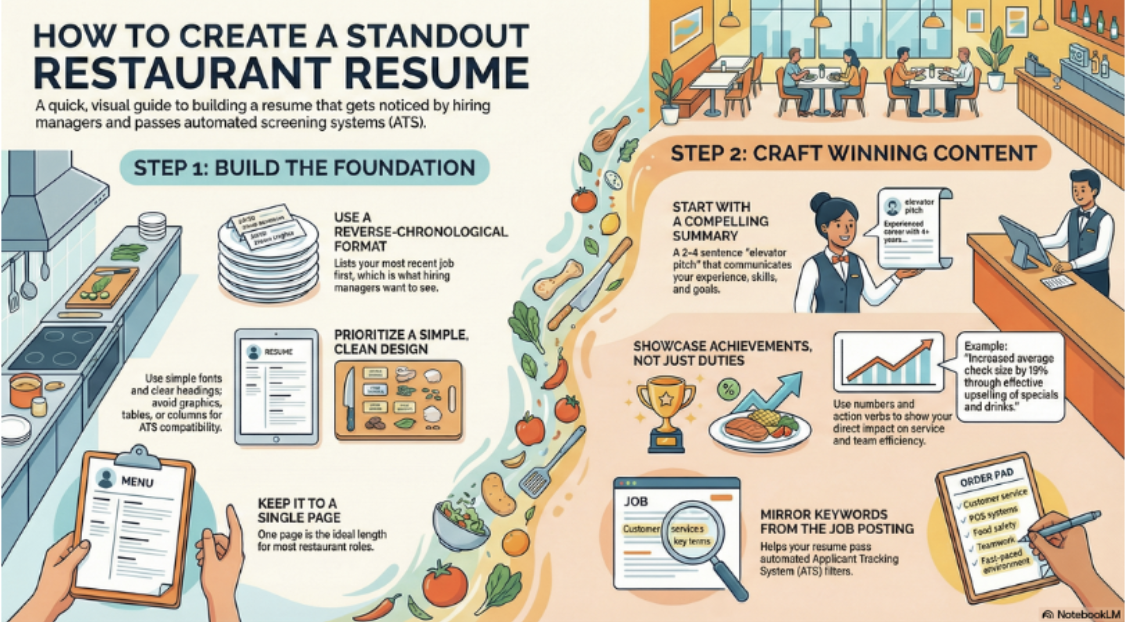
- Reverse-chronological format
This is the most common and effective format for restaurant workers with prior experience. It lists your most recent job first, making it easy for hiring managers to see your latest role, responsibilities, and achievements tied to key restaurant metrics. - Combination (hybrid) format
Ideal for entry-level candidates or those changing roles. This format highlights skills first, then work experience, allowing you to showcase customer service, teamwork, and adaptability while getting started. - Functional format (use sparingly)
Best only if you’re new to the workforce. It focuses heavily on skills rather than job history, but some restaurant hiring managers prefer seeing where you’ve worked—so use this format carefully.
What to Look for in a Restaurant Resume Template
A strong restaurant resume template should include:
- Clear section headings
- Bullet points instead of long paragraphs
- Consistent spacing and font size
- Simple fonts (Arial, Calibri, Helvetica)
- ATS-friendly formatting (no tables, columns, or graphics)
Avoid heavy colors, images, or icons. Many restaurants use applicant tracking systems, and overly designed resumes can be filtered out before a human ever sees them, especially when applying through restaurant hiring software.
Tip: If you want a template built specifically for restaurant roles, StaffedUp’s free resume generator automatically formats your resume for food service jobs—saving time while keeping it hiring-manager friendly.
Writing a Restaurant Resume
Once you’ve chosen the right restaurant resume format, the next step is focusing on how you present your experience. A strong restaurant resume doesn’t just list jobs—it shows how your skills translate into great service, smooth operations, and satisfied guests, which is essential in modern restaurant hiring.
Emphasizing Transferable Skills
Transferable skills are critical in the restaurant industry, especially for entry-level candidates or those moving between roles. Hiring managers often prioritize how you work over where you worked, particularly when evaluating candidates through a restaurant applicant tracking system.
Even if you’re new to restaurants, skills gained in retail, hospitality, events, or customer-facing roles apply directly to restaurant jobs and align with what restaurant employers look for.
Top Transferable Skills Restaurants Look For
- Customer service – handling guest needs, resolving issues, and creating positive experiences
- Communication skills – working with teammates, kitchen staff, and managers
- Teamwork – supporting coworkers during busy shifts
- Time management – juggling multiple tasks in fast-paced environments
- Adaptability – staying calm during rushes, schedule changes, or unexpected issues
Instead of listing these skills alone, show them in action through bullet points in your experience section using proven resume writing practices.
Example:
- Delivered friendly, efficient service in a high-volume environment, supporting team members during peak hours
- Communicated guest requests clearly to kitchen staff to ensure accurate orders
- Maintained composure and professionalism during busy shifts and customer complaints
These statements tell hiring managers exactly how your skills apply on the floor.
StaffedUp tip: If you’re unsure how to translate your experience into restaurant-ready bullet points, StaffedUp’s free resume generator prompts you with industry-specific language that matches restaurant job postings—making your resume stronger and more relevant.

Including Relevant Training and Certifications
Training and certifications can significantly strengthen your restaurant resume—especially in a competitive hiring market. Even short courses or entry-level certifications signal professionalism, reliability, and a commitment to food safety and service standards expected in restaurant operations.
Hiring managers often scan resumes quickly, and certifications help your resume stand out immediately during fast-paced restaurant hiring.
Why Certifications Matter in Restaurant Hiring
- They demonstrate industry readiness
- They reduce onboarding and training time
- They show awareness of food safety and compliance standards
- They increase trust—especially for guest-facing roles
Common Restaurant Certifications to Include
- Food Safety or Food Handler Certification
- ServSafe Food Handler or ServSafe Manager
- Alcohol service certification (TIPS, ServSafe Alcohol, etc.)
- Hospitality or customer service training programs
If a job posting lists a required certification, always include it—even if it feels obvious—since many employers filter applications using ATS tools.
How to List Certifications on Your Resume
Create a dedicated Certifications section or include them under Education & Training.
Example:
- ServSafe Food Handler Certification – Active
- Alcohol Service Certification (TIPS)
- Customer Service & Hospitality Training Program
For entry-level applicants, certifications can help balance limited experience by proving initiative and preparedness.
StaffedUp tip: Not sure how to format certifications or where to place them? StaffedUp’s free resume generator automatically formats certifications correctly based on the restaurant role you’re applying for—saving time and preventing common mistakes.
Using Keywords from the Job Posting
Using the right keywords is one of the most important steps in creating an effective restaurant resume—especially when employers use applicant tracking systems to filter candidates before a human ever sees the resume. This is a core part of modern restaurant hiring technology.
Hiring managers expect resumes to mirror the language of the job description. When your resume aligns with those terms, it signals that you’re a strong match for the role and improves visibility in an ATS system.
Why Keywords Matter
- Help your resume pass ATS filters
- Make your experience feel directly relevant
- Show attention to detail and role awareness
- Increase the likelihood of landing an interview
Where to Find the Right Keywords
Scan the job posting and look for repeated phrases, especially under:
- Responsibilities
- Required skills
- Preferred qualifications
Common restaurant resume keywords include:
- Customer service
- Food safety knowledge
- POS systems
- Teamwork
- Fast-paced environment
- Upselling
- Guest satisfaction
- Inventory management
- Shift leadership
How to Use Keywords Naturally
Avoid keyword stuffing. Instead, integrate keywords into:
- Your resume summary
- Bullet points under work experience
- Your skills section
Example:
Instead of: “Worked as a server and helped customers.”
Use: “Provided exceptional customer service in a fast-paced restaurant environment while using POS systems to process orders and increase guest satisfaction.”
Tailoring for Each Application
Small changes can make a big difference. Adjust:
- Job titles (when appropriate)
- Bullet point phrasing
- Skills ordering
This doesn’t mean rewriting your entire resume—just refining it to match the role and align with proven restaurant hiring strategies.
StaffedUp tip: StaffedUp’s free resume generator helps applicants automatically match keywords to specific restaurant roles, reducing the risk of missing critical ATS-friendly language.
Highlighting Relevant Work Experience
Your work experience section is where hiring managers spend the most time—especially in the restaurant industry, where proven performance matters more than titles alone. The goal isn’t to list every task you’ve ever done, but to show how your experience directly supports the role you’re applying for and helps build a high-performing restaurant team.
Focus on What Matters to Restaurants
Hiring managers want to quickly see:
- What type of restaurant you worked in (fast casual, fine dining, high-volume, etc.)
- How you interacted with guests
- Whether you can handle pressure
- How you contributed to service quality and team efficiency
When listing experience, include:
- Job title
- Restaurant name
- Dates of employment
- 3–5 strong bullet points per role
Use Achievement-Focused Bullet Points
Instead of describing duties, highlight outcomes that tie to key restaurant metrics.
Weak example:
“Responsible for serving tables and taking orders.”
Stronger example:
“Delivered attentive, high-quality service to 40+ guests per shift while maintaining accuracy and speed during peak hours.”
Quantify When Possible
Numbers help your resume stand out and feel credible.
Examples:
- “Increased average check size by 15% through effective upselling”
- “Maintained a 95% guest satisfaction rating during weekend shifts”
- “Supported a team serving 300+ covers per night”
Experience Counts—Even if It’s Not Traditional
Relevant experience can include:
- Serving, hosting, bussing, or barback roles
- Catering or event service
- Fast food or counter service
- Hotel or hospitality service roles
Even non-restaurant jobs can work if they show:
- Customer service
- Teamwork
- Time management
- Reliability
StaffedUp tip: If you’re unsure how to phrase your experience, the free StaffedUp resume generator turns basic job details into polished, restaurant-ready bullet points tailored to the role you want.
Creating a Compelling Resume Summary
Your resume summary sits at the top of your restaurant resume and often determines whether a hiring manager keeps reading. In a fast-paced industry, this section should immediately communicate your value, experience level, and the type of role you’re targeting—especially in competitive restaurant hiring.
What Makes a Strong Restaurant Resume Summary
A strong summary answers three questions in 2–4 sentences:
- Who are you professionally?
- What restaurant experience or skills do you bring?
- What kind of role are you seeking?
Think of it as your elevator pitch—clear, specific, and tailored to the job posting using language aligned with restaurant hiring strategy.
What to Include
- Your role or experience level (server, line cook, restaurant manager, entry-level, etc.)
- Core strengths (customer service, leadership, speed, accuracy)
- Type of restaurant environment you thrive in
- A measurable result if possible
Including the right phrasing also helps your resume perform better in an applicant tracking system.
Examples of Effective Resume Summaries
Server resume summary example:
“Experienced restaurant server with 4+ years in high-volume casual dining environments. Known for delivering exceptional customer service, maintaining accuracy during peak hours, and increasing guest satisfaction through attentive service.”
Restaurant manager resume summary example:
“Results-driven restaurant manager with 8 years of experience leading front-of-house teams, improving service efficiency, and driving revenue growth. Proven ability to train staff, control costs, and maintain high guest satisfaction.”
Entry-level restaurant resume summary example:
“Motivated entry-level restaurant professional with strong communication skills, a positive attitude, and a passion for customer service. Seeking an opportunity to grow in a fast-paced restaurant environment.”
Tailor It to Each Job
Hiring managers can spot generic summaries instantly. Adjust your summary to reflect:
- The restaurant style (fine dining vs fast casual)
- The role (server, cook, host, manager)
- Keywords used in the job posting
This not only improves readability but also helps your resume pass ATS filters used in modern restaurant hiring technology.
StaffedUp tip: If writing a resume summary feels challenging, using proven standout resume tips can help keep it focused and effective.

Describing Restaurant Experience
Your work experience section is the most important part of a restaurant resume. Hiring managers want to see where you’ve worked, what you were responsible for, and how well you handled guest service, speed, and teamwork—key traits for building a high-performing restaurant team. The goal is to show impact—not just list duties.
Below is how to clearly describe restaurant experience by role, using language that hiring managers and applicant tracking systems recognize in a restaurant ATS.
Restaurant Server Resume Examples
A strong server experience section should focus on customer service, accuracy, upselling, and working under pressure. Servers are evaluated on guest satisfaction, teamwork, and consistency during busy shifts tied to core restaurant metrics.
What to highlight
- Type of restaurant (fine dining, casual, fast-paced)
- Volume handled per shift
- Guest interaction and problem resolution
- Sales or upselling results
- Point-of-sale system experience
Example server resume bullet points
- Provided attentive service to 40–60 guests per shift in a high-volume casual dining restaurant
- Delivered accurate food and beverage orders while maintaining speed during peak hours
- Used POS systems to process payments, split checks, and manage modifiers
- Increased average check size through consistent upselling of drinks and specials
- Resolved guest concerns quickly to maintain strong customer satisfaction
These bullet points show how you worked, not just what you did—an approach aligned with effective restaurant management practices.
Fine Dining Experience
Fine dining experience carries weight because it signals professionalism, attention to detail, and service standards. If you’ve worked in upscale restaurants, be specific.
What to include
- Wine and cocktail knowledge
- Formal service standards
- Menu expertise and pairings
- High guest expectations
Fine dining resume example
- Delivered polished table service in an upscale dining environment with a focus on timing and presentation
- Demonstrated strong wine and menu knowledge to guide guest selections
- Maintained exceptional guest satisfaction during private events and high-end service hours
Fast Food and Casual Dining Experience
Fast-paced environments show reliability, speed, and teamwork. These roles are especially valuable for entry-level candidates entering the restaurant industry.
What to highlight
- Order accuracy
- Speed and efficiency
- Team communication
- Customer-facing experience
Fast food resume example
- Served high-volume customer orders while maintaining speed and accuracy
- Operated POS systems and handled cash transactions
- Maintained cleanliness and food safety standards during busy shifts
- Worked closely with kitchen staff to ensure fast order turnaround
Tips for Writing Strong Experience Sections
- Start each bullet with an action verb
- Keep bullets focused on results and guest impact
- Avoid long paragraphs—clarity matters
- Tailor experience to match the job posting
StaffedUp tip: If you’re unsure how to phrase your restaurant experience, the free StaffedUp resume generator converts basic job details into strong, role-specific bullet points that hiring managers want to see.
Following these principles helps your resume stand out in competitive restaurant hiring workflows.
Applicant FAQs: Restaurant Resume Format
- What is the best resume format for restaurant jobs?
The reverse-chronological format is the most effective for restaurant roles. It highlights your most recent experience first, which hiring managers care about most. Entry-level candidates can also use a combination format to showcase skills alongside limited experience. - How long should a restaurant resume be?
One page is ideal for most restaurant jobs, including server, host, cook, and entry-level management roles. Two pages may be acceptable for senior restaurant managers or general managers with extensive experience. - Should I customize my restaurant resume for every job?
Yes. Tailoring your resume to each job posting significantly improves your chances of getting an interview. Use keywords from the job description and highlight experience that matches the specific role and restaurant type. - What skills should I include on a restaurant resume?
Include a mix of hard and soft skills, such as:
-
- Customer service
- Point-of-sale (POS) systems
- Food safety knowledge
- Teamwork and communication
- Time management
- Upselling and sales
- Problem-solving

Hire Smarter, Faster
StaffedUp simplifies hiring for restaurant & hospitality operators. Post your first job for $1.