
Key Takeaways
- Restaurant hiring in 2025 is fiercely competitive, with turnover rates reaching 70-100% annually—but a structured hiring process, strong employer brand, and smart onboarding can cut time-to-hire by 30-50% and dramatically improve retention.
- Specialized hiring platforms like StaffedUp help restaurants post jobs faster, communicate with candidates via text, and track applicants in one place, giving operators an edge in high-turnover industries.
- Clear employer branding that honestly showcases pay, perks, and growth opportunities matters as much as the wage itself when attracting Gen Z and millennial workers who want more than just a job.
- Structured onboarding with specific goals, assigned buddies, and regular check-ins during the first 90 days reduces early quits and turns new hires into long-term team members.
- The article closes with concise, restaurant-specific FAQs covering how long hiring should take, where to post jobs, and how to reduce turnover for good.
Your Restaurant’s Future Starts With Who You Hire
Labor shortages and constant turnover have made restaurant hiring one of the most critical responsibilities for any owner or GM in 2025. When 73% of your team might leave within a year—and you’re competing against gig apps, warehouses, and the restaurant down the block—getting hiring right isn’t optional. It’s survival.
This guide is written for restaurant owners, franchisees, multi-unit operators, and hiring managers working in fast casual, QSR, and full-service concepts. Whether you’re opening a new location in Dallas, staffing up for summer tourism in Orlando, or replacing a sudden GM departure in Phoenix, the principles here apply. Restaurant hiring challenges and opportunities exist across the entire country, from coast to coast.
Here’s the reality: turnover in full-service restaurants often exceeds 70-100% annually. Seasonal spikes create staffing crunches. Rising wages mean you’re fighting for the same talent as everyone else. Hiring needs can vary significantly by region, with differences between urban and rural areas or between different states. The good news? By tightening your hiring process, upgrading your employer brand, and using better tools, you can staff more reliably and stop living in constant “Help Wanted” mode.
If you’re ready to bring order to the chaos, platforms like StaffedUp are built specifically for restaurants and high-turnover industries—automating posting, screening, and scheduling so you can focus on running your business. These tools help create a more organized and supportive space for both managers and candidates, improving the hiring experience.
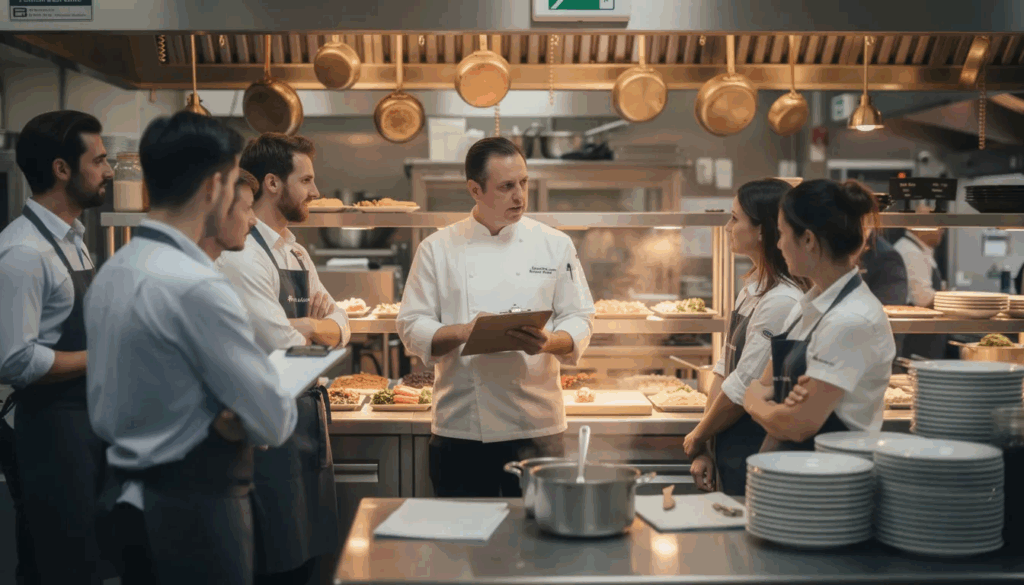
Understanding Today’s Restaurant Hiring Landscape
The restaurant labor market has fundamentally shifted since 2020. Worker expectations have changed. Competition has intensified. And the old playbook of posting a sign in the window and hoping for walk-ins doesn’t cut it anymore.
What’s different now:
- Candidates expect predictable, flexible schedules and will walk if you can’t provide them
- Mental health awareness and work-life balance matter more to younger workers
- Fast response times are essential—strong candidates expect replies within 24-48 hours
- Gen Z (70% prefer part-time) wants growth opportunities, not dead-end positions
- Gig work from DoorDash, Uber Eats, and Instacart offers immediate, flexible income that restaurants must compete against
The hiring needs also differ by concept. QSR and fast casual prioritize speed and volume—you need reliable people who can handle repetitive tasks under pressure. Full-service restaurants need servers with wine knowledge, guest engagement skills, and the ability to upsell 15% on average check. Understanding your specific needs shapes everything from job posts to interview questions.
Employers who use digital tools—centralized applicant tracking, text-based communication, and job post distribution through platforms like StaffedUp—have a measurable edge. They respond faster, lose fewer candidates to competitors, and spend less time on admin work that doesn’t move the needle.
Defining the Roles You Need: Front-of-House, Back-of-House, and Leadership
Clearly defined roles and expectations reduce mis-hires and speed up your hiring process. Before you post a single job, get crystal clear on what you actually need.
Typical restaurant hiring categories:
- Front-of-House Careers: servers, hosts, bartenders, cashiers, drive-thru attendants
- Back-of-House Careers: line cooks, prep cooks, dishwashers, expos, bakers
- Leadership Roles: shift leads, assistant managers, general managers, district leaders
For each category, you need individuals who are responsible for specific duties and outcomes. Define core responsibilities in plain language, required skills, and realistic pay structures. A line cook in Chicago or New York typically earns $15-20/hour as of 2025, while servers in high-volume concepts can earn significantly more with tips.
Leadership hiring deserves special attention. These are the culture carriers who will reduce turnover, build systems, and mentor younger staff. Don’t rush these hires—a bad manager costs you far more than an empty position.
Front-of-House Roles: Your Restaurant’s Public Face
FOH employees often determine whether guests return. Their service, speed, and attitude shape every review, every tip, and every repeat visit.
Key FOH positions:
- Server: Takes orders, delivers food, manages 6-8 tables simultaneously, handles payments, upsells menu items, and is responsible for serving guests with professionalism and care to ensure a positive dining experience.
- Bartender: Mixes drinks, manages bar guests, maintains inventory, often serves as a host overflow during rushes
- Host: Greets guests, manages reservations and waitlist, sets the first impression
- Cashier/Counter: Handles transactions, answers questions, keeps the line moving in QSR settings
- Drive-thru Team Member: Takes orders quickly, handles payments, maintains accuracy under pressure
When hiring FOH, look for communication skills, comfort with strangers, and the ability to handle multiple tasks during Friday and Saturday rushes. Basic math for payments matters. So does eye contact and genuine warmth.
Job descriptions for FOH roles should specify peak hours—nights, weekends, and holidays like Mother’s Day and New Year’s Eve—plus tip expectations. Honest details attract candidates who will actually show up and stay.
Posting FOH openings across multiple sources automatically via StaffedUp helps fill these customer-facing roles faster, especially during peak hiring seasons.
Back-of-House Roles: Consistency Behind the Scenes
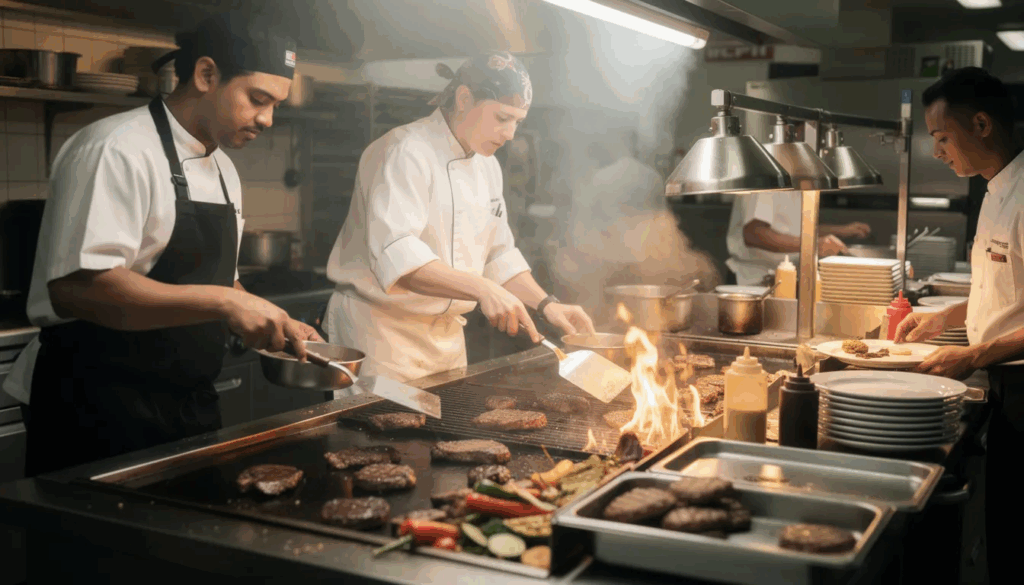
BOH quality and speed drive your reviews, ticket times, and food costs—even though guests rarely see this team. A strong back of house is the foundation of every successful restaurant.
Primary BOH positions:
- Line Cook: Executes dishes during service, maintains station cleanliness, handles 100+ covers per shift in busy restaurants
- Prep Cook: Prepares ingredients before service, follows recipes precisely, manages prep lists with deadlines
- Dishwasher: Keeps dishes, equipment, and the kitchen clean—often the unsung hero of the operation
- Pastry/Baker: Creates desserts, breads, and baked goods with consistency and creativity
- Kitchen Supervisor/Expo: Coordinates orders, ensures quality, manages communication between FOH and BOH
Be honest about BOH work conditions in your job posts. The work involves heat, standing 6-8 hours, lifting 25-50 pounds, and operating in tight spaces during dinner rush. Candidates who know what they’re signing up for are more likely to stay.
Screen for reliability, knife skills, recipe-following ability, and safe food handling. Certifications like ServSafe or local health requirements (Chicago, New York, and other major cities have specific mandates) should be clearly stated.
Clear BOH job postings and fast communication through a single hiring tool like StaffedUp prevent chronic understaffing on the line—a problem that snowballs into burnout, turnover, and bad reviews.
Management and Leadership Roles: Culture and Consistency
Managers and shift leads set the tone for retention, training, and guest experience across every shift. When your restaurant manager creates a positive environment, employees stay longer and guests notice the difference.
Typical leadership roles:
- Shift Supervisor: Manages individual shifts, handles immediate problems, ensures service standards
- Assistant Manager: Supports GM with scheduling, training, inventory, and daily operations
- General Manager: Owns the P&L, hires and develops staff, drives sales and guest satisfaction
- Area/District Manager: Oversees multiple locations, ensures consistency, develops GMs
Leadership job descriptions should clearly state performance expectations: sales targets, labor cost goals (typically under 30% of sales), guest satisfaction benchmarks, and timeline for promotion. Vague descriptions attract vague candidates.
Leadership candidates can come from internal promotions or external hires. Building an internal pipeline—server to trainer to shift lead to assistant manager—creates loyalty and ensures you’re not scrambling when a GM resigns.
Using StaffedUp to track applicants and notes helps maintain a talent pipeline for future management openings, so you’re prepared instead of panicked when positions open.
Building an Employer Brand That Attracts the Right Candidates
Your employer brand is how it feels to work at your place compared to the competition down the street. In a people business like restaurants, this matters enormously.
Strong employer brands highlight specific, concrete benefits:
- Schedules posted two weeks in advance
- Meal discounts during and after shifts
- Tuition support or development programs
- Clear paths from hourly to management
Include employee stories in your hiring materials. The line cook who became a GM in three years. The server who used flexible schedules to attend community college. These stories showcase each employee’s journey within your restaurant, highlighting both personal and professional development. Real stories create real connection.
When presenting your culture, describe it as inclusive, team-oriented, safety-conscious, and respectful—but make sure it’s true. Candidates can smell inauthenticity, and broken promises create the turnover you’re trying to avoid.
Cross-post your employer story on your restaurant website, social media, in-store signage, and job listings via platforms like StaffedUp for consistent messaging across every touchpoint.
Showcasing Pay, Perks, and Growth Honestly
Today’s candidates value transparency about pay and scheduling more than vague promises. They’ve heard “competitive wages” and “great culture” before. They want details.
What to highlight in job posts and careers pages:
- Hourly wage ranges (not “DOE”—give real numbers)
- Tip averages on busy nights
- Average weekly hours and shift lengths
- Typical time-to-promotion for strong performers
Non-traditional perks also attract candidates:
- Staff meals during shifts
- Shift drinks where legal
- Early access to earned wages through tools like Paylocity
- Free parking or transit passes
- Referral bonuses with clear dollar amounts ($200-500 is common) and payment timelines
“Growth” should be described with concrete pathways. For example: new hires can become trainers in 6 months and assistant managers within 18-24 months if they hit measurable goals. This attracts people who want a career, not just a position to fill until something better comes along.
Hiring tools like StaffedUp allow employers to keep these details consistent across all job boards, saving time and reducing confusion for applicants who see your posts in multiple places.
Creating a “Life at Your Restaurant” Snapshot
Candidates often decide in seconds if a workplace looks like a fit based on photos, language, and tone. Give them something real to evaluate.
What to include:
- Real photos of team members on the line, at pre-shift meetings, or celebrating wins (with permission—avoid stock photos)
- Short quotes from actual employees about why they stay
- Realistic but positive language about pace (“fast-moving Fridays,” “packed brunch weekends”)
This “Life at Our Restaurant” content should live on your hiring page and be reflected in job postings distributed via StaffedUp. Candidates who self-select out after seeing the reality save everyone time. Candidates who self-select in arrive ready to work.
Keep the layout simple and clean with a brief intro and short paragraphs. Busy owners should be able to update it at least once a year without hiring a designer.
Writing Effective Restaurant Job Descriptions
A clear, specific job post cuts down on unqualified applicants and improves interview show-up rates. Generic posts attract generic (or wrong-fit) candidates.
Basic structure for every job post:
- Concise role summary (2-3 sentences)
- 5-7 key responsibilities with concrete examples
- 4-6 requirements (skills, certifications, availability)
- Pay and benefits (be specific)
- Schedule expectations (shifts, weekends, holidays)
- How to apply (make it simple)
Use concrete examples: “handle 6-8 tables at once,” “prep and portion recipes for 150 covers per night,” “stand and walk for up to 8 hours.” These details help candidates self-assess their fit.
Include your restaurant’s culture in 1-2 lines: scratch kitchen, family-owned since 2010, high-volume national brand with strong training programs. This context helps candidates choose you.
Using a centralized hiring platform like StaffedUp lets employers save and reuse proven job description templates, updating small details rather than writing from scratch each time a position opens.
Front-of-House Job Posting Essentials
FOH posts should attract outgoing, reliable people who enjoy guest interaction and thrive in fast-paced work.
Include in every FOH posting:
- Expected number of guests per shift
- Tip structure (pooled vs. individual)
- POS system used (many candidates prefer systems they already know)
- Typical shift lengths (4-8 hours)
- Peak days and times (weekends, holidays, special events)
Use friendly, clear language. Avoid restaurant jargon that might scare off candidates from retail or customer service backgrounds who could excel in FOH roles.
Specify traits: “comfortable talking to strangers,” “can handle multiple tasks at once,” “calm under pressure during weekend rushes.” These descriptions help the right people see themselves in the role.
FOH positions should have a clear “apply in minutes” call-to-action, directing candidates to a simple application form hosted or integrated through a tool like StaffedUp.
Back-of-House Job Posting Essentials
BOH job descriptions should be honest about physical demands and skill requirements while still selling the positive aspects—teamwork, creativity, learning, and the satisfaction of a well-executed service.
Include specific duties:
- Following recipes with precision
- Maintaining station cleanliness throughout service
- Logging temperatures for food safety
- Handling prep lists with set deadlines
- Working specific equipment (flat-top grill, fryers, combi ovens, pizza deck ovens)
State required certifications (ServSafe, local food handler card) with renewal timelines. This filters out candidates who can’t meet legal requirements before you waste time interviewing them.
Point out career steps: line cook to sous-chef or kitchen manager, with approximate timeframes based on performance. Growth opportunities matter to serious BOH candidates who want to build skills.
Mention training offered—paid training shifts or structured 2-week onboarding plans—to attract people new to BOH work who have the right attitude but need to develop their skills.
Streamlining Your Hiring Process From Application to Offer
Slow or confusing hiring processes cause restaurants to lose strong candidates to faster competitors. In a market with 1.5 million unfilled restaurant jobs, speed matters.
Realistic hiring timeline:
- Application review: within 24-48 hours
- Initial phone or text screen: within 1-3 days
- In-person interview or working interview: within 5-7 days
- Offer decision: within 24 hours after final interview
For hourly roles, you should move from application to offer in 5-10 days. Management roles typically take 2-3 weeks. Faster timelines improve candidate quality because the best people get snapped up quickly.
Standardize interview questions for FOH, BOH, and management roles to reduce unconscious bias and save managers’ time. When everyone asks the same core questions, you can compare candidates fairly.
Centralized tools like StaffedUp help track all candidates, automate follow-ups, and manage communication via email or SMS from one place. If you’re still using paper applications or scattered emails, migrating to a restaurant-focused platform can immediately improve speed and organization.
Efficient Screening and Interviewing
Quick but structured screening separates good hires from costly mistakes in high-volume restaurant hiring.
Must-ask questions for FOH:
- What’s your availability for nights and weekends?
- Describe a time you handled a difficult guest.
- How do you stay organized when managing multiple tables?
Must-ask questions for BOH:
- What’s your experience with [specific equipment]?
- How do you handle criticism during a rush?
- Describe your approach to following recipes precisely.
Brief phone or video screens (10-15 minutes) confirm basics before bringing candidates in for in-person interviews. This saves everyone time and helps you focus resources on promising candidates.
Schedule interviews in dedicated blocks—Tuesdays and Thursdays between lunch and dinner, for example—to stay consistent and avoid cancellations. Managers with predictable interview windows are more likely to actually conduct them.
StaffedUp or similar tools can automate interview reminders to reduce no-shows (which can run 20-30% for some restaurants) and keep candidates engaged throughout the process.
Making Offers and Closing Candidates Fast
Strong restaurant candidates often have multiple offers and may decide within days. Speed and clarity win.
Offers should be written and clear:
- Start date
- Pay rate
- Tip structure or bonus eligibility
- Position title
- Direct supervisor’s name
- Benefits eligibility and timeline
Give candidates 24-48 hours to accept, but aim for same-day verbal agreement when possible. The best candidates don’t stay available for long.
Have a standard offer template ready for each role so managers can send offers quickly without waiting for corporate or ownership to write from scratch. This simple preparation prevents lost hires.
Using StaffedUp to send and track offers and new hire paperwork reduces back-and-forth and prevents lost documents—common problems that delay start dates and frustrate everyone.
Onboarding and Training: Turning New Hires Into Long-Term Team Members
The first 30 days determine whether many restaurant employees stay or move on. Structured onboarding boosts retention by up to 25% compared to “figure it out yourself” approaches.
Clear onboarding plan:
- Day 1: Paperwork completion, introduction to team, facility tour, safety basics, uniform and schedule
- Week 1: Shadowing experienced team members, simple tasks, menu overview or station basics
- Week 2-4: Gradually increasing responsibility with regular check-ins and feedback
Assign each new hire a “buddy” or trainer for their first 2-3 weeks. This is particularly important for FOH positions and line cooks, where small mistakes can cascade into big problems.
Set specific, measurable goals: take orders independently by day 5, run a full station by week 3, achieve 95% order accuracy by day 14. Give feedback against those goals so new hires know where they stand.
Structured onboarding reduces early turnover and ensures your hiring investment pays off in performance, guest satisfaction, and a team that actually wants to stay.
Culture, Communication, and Retention
Good hiring only works long-term if backed by a healthy culture and consistent communication. The work you do after the hire matters as much as the hire itself.
Building a retention-focused culture:
- Hold regular pre-shift meetings to set expectations, share wins, and reinforce values like hospitality and teamwork
- Create simple recognition practices: employee of the month, shout-outs in group chats, or small gift cards for exceptional performance during busy events
- Schedule quarterly one-on-ones with managers to discuss schedule preferences, goals, and growth opportunities
Foster an environment where employees feel heard. When people believe their feedback matters and their dreams are supported, they stay longer and work harder.
Data from StaffedUp—like how long roles stay open, where strong candidates come from, and which sources produce the best retention—can guide better hiring and retention decisions over time. What gets measured gets improved.
Leveraging Technology Like StaffedUp for High-Turnover Industries
Restaurants and other high-turnover industries—hospitality, retail, entertainment venues—benefit from specialized hiring tools built for their unique pace and challenges.
Features that make a difference:
- Centralized applicant tracking across multiple locations
- One-click job post distribution to multiple boards
- Text messaging candidates (response rates are 3x higher than email)
- Simple templates for common roles
- Automated interview scheduling and reminders
- Offer letter and paperwork management
These tools help small independent restaurants stay organized just as effectively as multi-unit franchisees and corporate-run locations. The technology scales with your needs.
Example scenarios:
- Patio season prep (May): Quickly hire 10-15 extra servers and bussers by posting across all channels simultaneously and using text outreach to speed up responses
- Sudden GM departure (November): Tap your existing applicant pipeline in StaffedUp to find management candidates you’ve already screened, reducing panic before the holiday rush
If you’re tired of juggling resumes, paper applications, and multiple job boards, StaffedUp offers a focused solution for restaurant hiring needs—one that’s designed for the realities of this industry.
FAQs About Restaurant Hiring
How long should it take to hire for a typical restaurant role?
Most restaurants can move from application to offer in 5-10 days for FOH and BOH roles when using a structured process. Management positions typically take 2-3 weeks due to more extensive vetting. Faster timelines usually improve candidate quality because the best people get hired quickly. Using an ATS like StaffedUp can cut traditional 40-60 day timelines down to 20-30 days.
Where should I post my restaurant jobs to get better applicants?
Use a mix of online job boards (Indeed, Poached for restaurants, local sites), social media, in-store signage, and employee referrals. Referrals consistently produce the highest-quality candidates—67% of operators rank them as their top source. Platforms like StaffedUp can distribute job posts to multiple channels from one dashboard, saving time while expanding your reach.
How can I reduce turnover in my restaurant?
Focus on realistic scheduling that respects employees’ lives outside work. Train managers to communicate respectfully and provide regular feedback. Be transparent about pay and advancement opportunities. Offer structured onboarding with clear goals for the first 90 days. Conduct regular check-ins to address concerns before they become resignations. Restaurants with strong onboarding see 25% better retention than those without.
What should I pay attention to when interviewing restaurant candidates?
Prioritize availability, attitude, reliability, and how candidates handle pressure. For FOH, assess communication and guest interaction comfort. For BOH, evaluate technical skills and ability to follow direction during rush. Use the same core questions for every candidate in a given role so you can compare them fairly and reduce bias in your decisions.
Do I really need a hiring platform, or can I just use paper applications?
Very small restaurants with minimal hiring needs can start with paper. But as soon as you’re hiring multiple roles or managing more than one location, a hiring platform like StaffedUp becomes valuable quickly. It centralizes applicants, speeds communication through text, prevents lost applications, and tracks your hiring data so you can improve over time. The cost of one bad hire or one lost great candidate often exceeds the platform’s annual price.